When you hear the term “sight words,” what comes to mind? My understanding of this has changed a lot over the years, and even my definition of “sight words” has shifted. For a long time, “sight words” were widely misunderstood. Many of us were taught that these were words students couldn’t sound out and simply had to memorize. I believed that too.
This post is really about high-frequency words (the words students see most often in text and need to read automatically). In the past, the term “sight words” was often used as an umbrella term to refer to these words, along with irregular words or words that students could recognize instantly.
I used to think of these words as words that couldn’t be sounded out and had to be memorized as a whole. I relied heavily on flashcards and lists, assuming that if students saw the words enough times, they would stick. But for many of my students, that approach wasn’t working.
That’s what led me to dig into the research, and what I learned completely changed how I teach these words. If you’re confused about what a “sight word” is, here’s your first takeaway:
Understanding Sight Words and High-Frequency Words
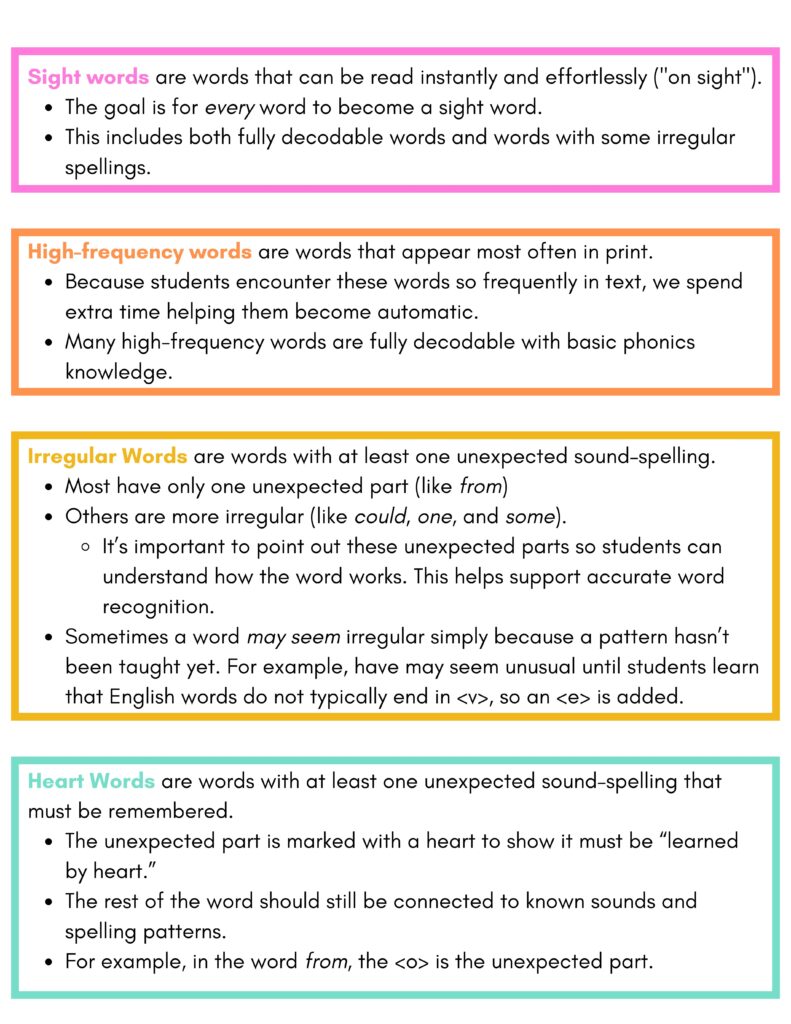
The term “sight word” has been used as an umbrella term for so long that it’s caused a lot of confusion. Let’s take a moment to break down these terms so we can clearly distinguish between them.
Why is it Important to Turn High-Frequency Words into Sight Words?
Knowing that these high-frequency words appear more often in children’s texts means we should spend a little more time on them so our students can read them automatically and with little effort. Helping these high-frequency words become “sight words” will begin to improve their fluency because automatic word recognition is the first step toward fluency (followed by developing prosody, rate, expression, and appropriate phrasing).
Research shows that students need multiple successful exposures to a word to store it for automatic recognition (Ehri, 2005; Share, 1995). The number of exposures varies widely depending on the learner and the word, and students with reading difficulties often require significantly more repetition and explicit practice (Torgesen, 2006; Shaywitz, 2003; Wolf, 2007).
However, by second grade, your typically developing readers can store a new word permanently in only one to four exposures (Bowey & Miller, 2007). The exact number for readers with dyslexia is not known, though I can tell from experience that it’s much higher than that, and it varies from student to student.
Some Facts about High-Frequency Words
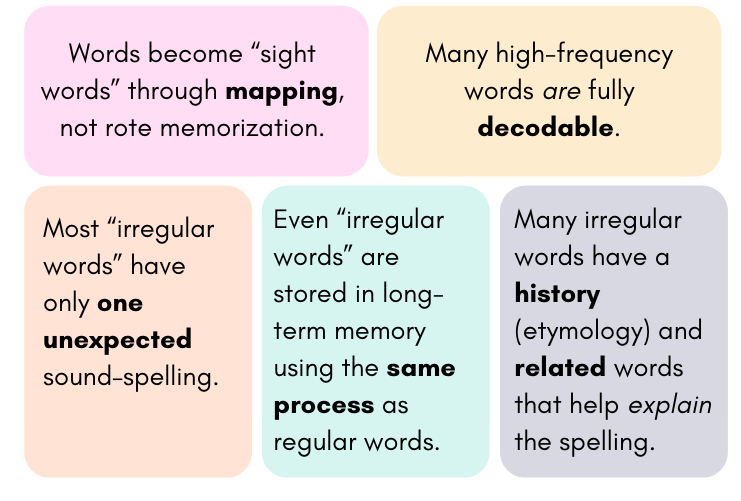
Here are a few important things I’ve learned about high-frequency words that completely changed the way I teach them.
How Do We Learn Sight Words?
We now have more research showing that reading outcomes are stronger when students are taught to decode words using sound–symbol relationships rather than rote memorization. This applies to all words, including high-frequency words.
So how do words become “sight words”? Through orthographic mapping. According to Ehri (2005), new readers map the phonemes (sounds) in words (whose pronunciations they already know) to the sequence of letters they see on the page. Once a word has been adequately mapped, it is there for quick, effortless retrieval.
We form connections between the pronunciation of a word (its individual sounds) and the sequence of letters that represent those sounds. In other words, we are linking sounds to print.
We need three things for this to happen:
- Phoneme awareness
- Knowledge of sound–spelling relationships
- Word study: helping students see the connections between letters and sounds
Here’s something that changed how I think about sight words: according to Kilpatrick (2015), we don’t store words using visual memory. We use our eyes to take in the word, but it is stored through connections between its sounds, spelling, and meaning. That means words aren’t learned just by seeing them over and over again. They’re learned by mapping the sounds in the word to the letters that represent them. For more about orthographic mapping, click here.
Another study out of Stanford led by McCandliss (2015) found that beginning readers who focus on letter–sound relationships show increased activity in the brain’s left-hemisphere reading network. This is the system most efficient for skilled reading. In other words, teaching students to decode C-A-T supports the development of more efficient reading pathways than asking them to memorize the word as a whole.
Once I understood how words are stored in the brain, my instruction started to shift. Here are a few of the biggest changes I made:
How to Teach High-Frequency Words
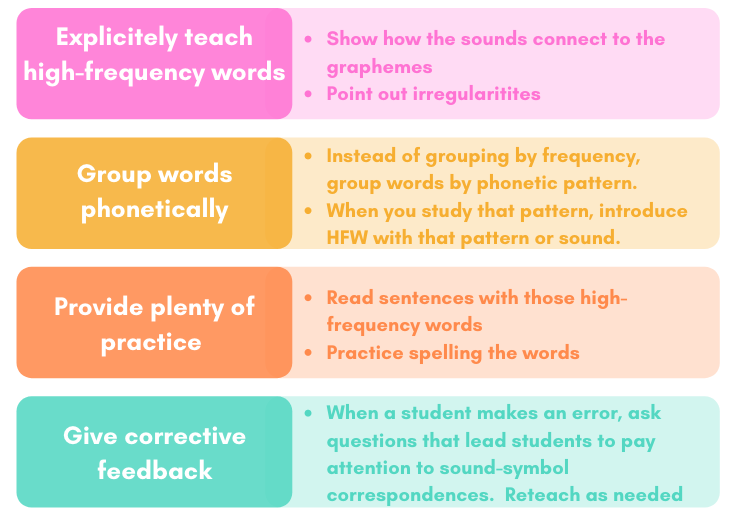
Now that I have a better understanding of how our brains learn new words, I’ve made some changes to my approach to teaching high-frequency words. Now, the first thing I do is introduce the word orally and explicitly teach the sound-symbol connections.
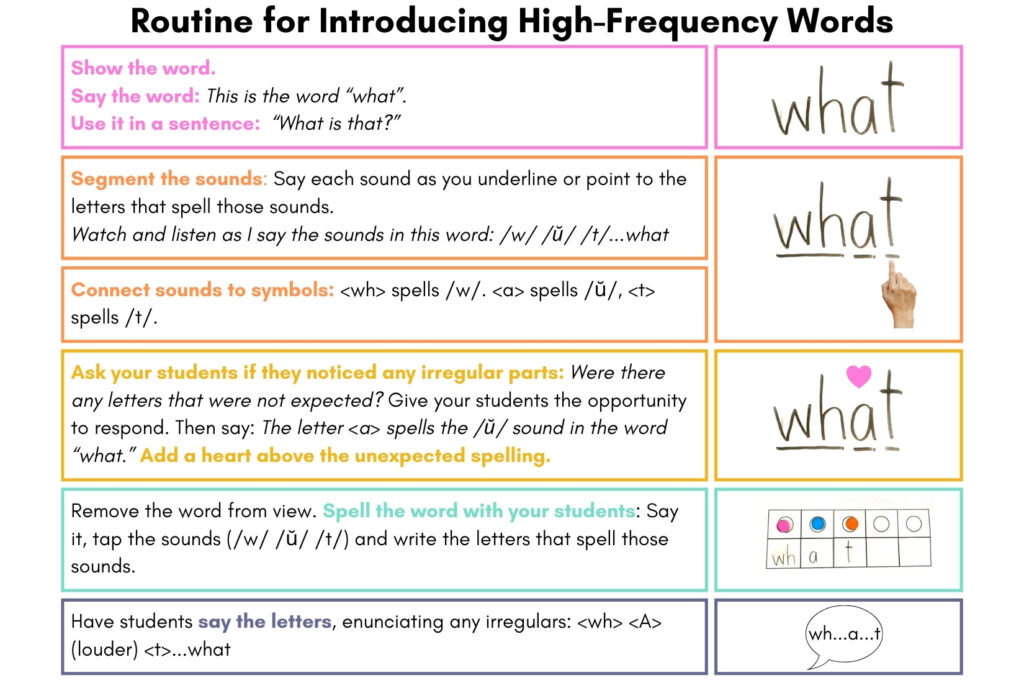
If you would like a printable version of the steps, click HERE to download the printable below.
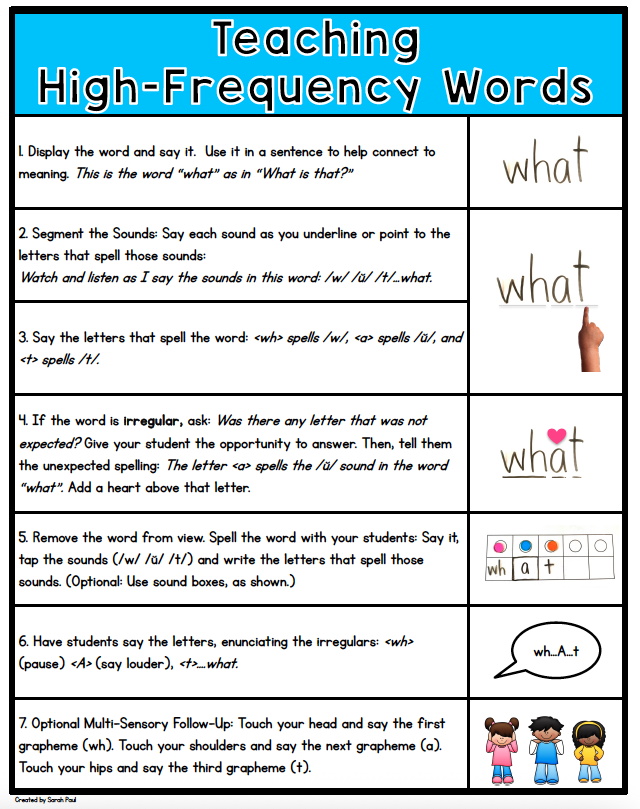
Highlight the “Irregular” or Unexpected Sound
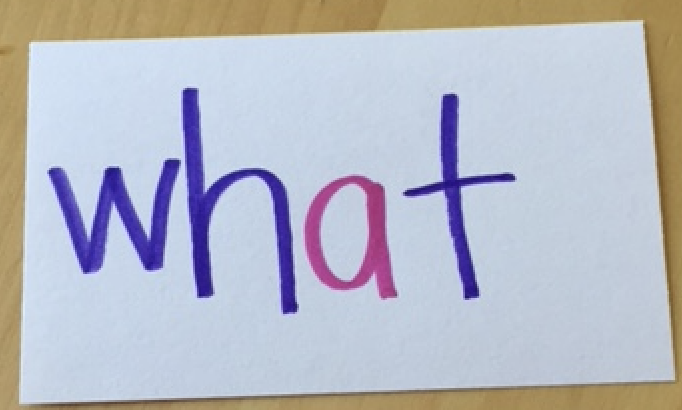
When a word has an unexpected sound–spelling, make that part visible. You can highlight it, outline it, or use a different color. Many teachers now use a heart above the unexpected spelling.
For example, in what, <wh> spells /w/, <a> spells /ŭ/, and <t> spells /t/. The <a> is the unexpected part, so that’s what you would mark.
Then, have students spell the word again, drawing attention to that part as they say the sounds: wh–A–t. Slightly emphasizing the unexpected spelling helps it stick, while still keeping the focus on mapping sounds to letters.
Make it Multi-Sensory
Have students see, say, and write the word. As they write or trace the letters, have them say the sounds and then the whole word.
This reinforces the connection between sounds and spelling, which supports orthographic mapping and helps move the word into long-term memory.
Provide Repeated Practice
Students need multiple successful exposures to a word before it becomes automatic. The goal is to give students enough practice to strengthen the connection between sounds and spelling over time.
You can keep this practice engaging by using quick, varied routines. Simple games, writing, and review activities can all provide the repetition students need while maintaining their attention.
Here are some easy games to play (with FREE editable templates):
Using Flash Cards Effectively
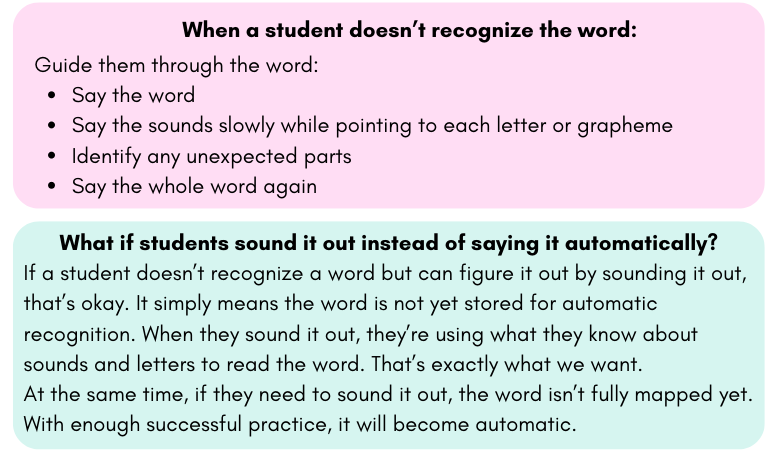
Just to be clear, flashcards themselves are not the problem. It’s more how they’ve traditionally been used. In the past, students were often expected to look at a word, memorize it, and say it automatically. But if a word hasn’t been mapped, it’s just a string of letters, and memorizing it as a whole doesn’t help it stick.
When a word has been explicitly taught, flashcards can be a helpful tool for building automaticity. The key is using them in a way that reinforces the connection between sounds and letters.
Spot it in Context
After a word has been explicitly taught, give students opportunities to use it in context. This helps connect the word’s spelling to its meaning.
For example, write a sentence with a blank and have students determine the correct word, then spell it. Afterward, revisit the word by connecting the sounds to the letters.
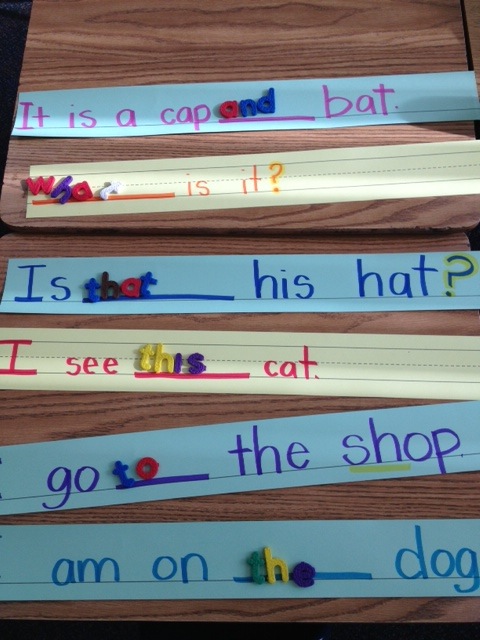
For a larger group, put the sentence strips in a pocket chart with the sight word chopped up into letters.
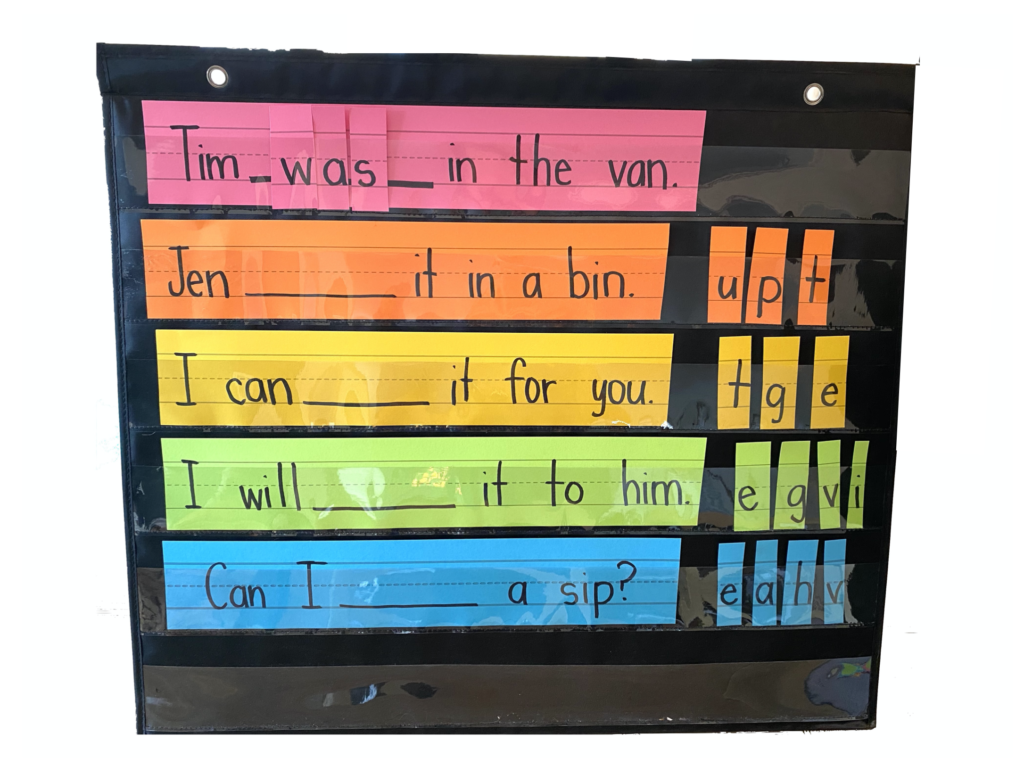
This is not meant to be a guessing strategy. We don’t want students relying on context to figure out unknown words in place of decoding. This is used after a word has been explicitly taught. It gives students a chance to apply the word in connected text and connect it to meaning.
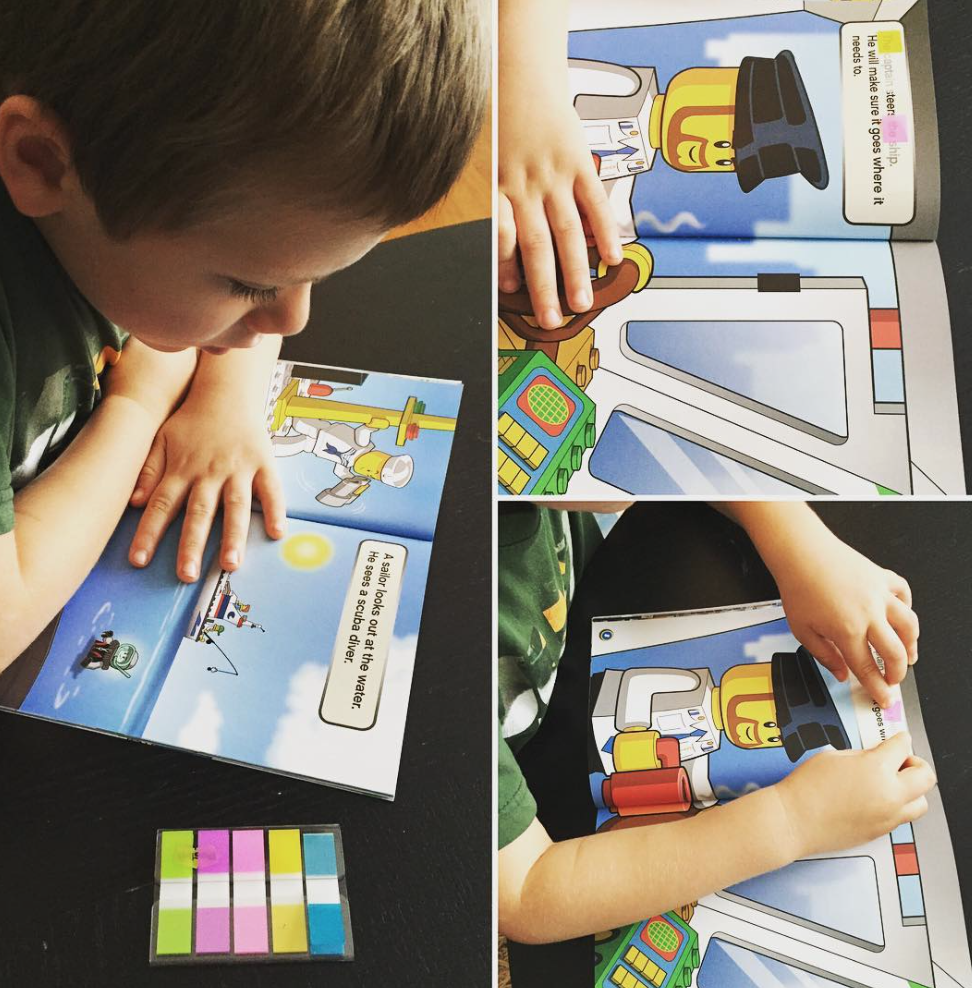
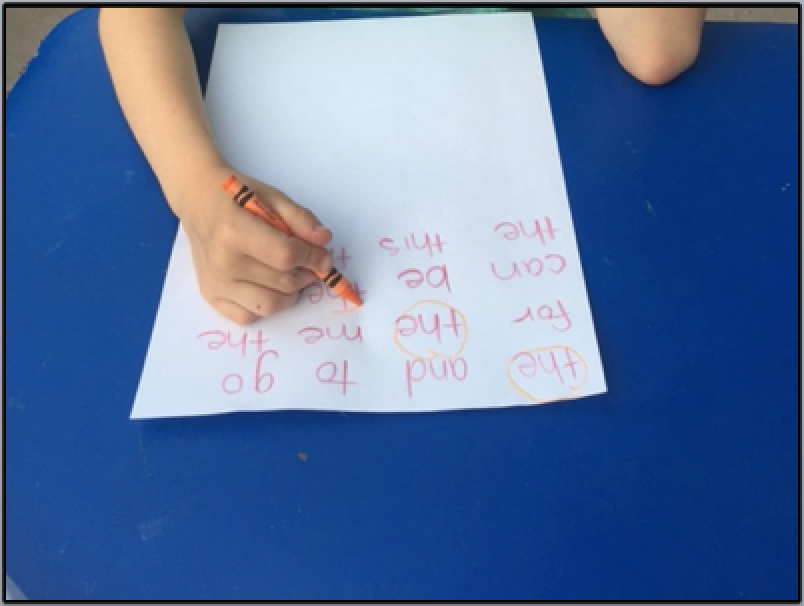
Word “Hunts”
Students can look for target words in books or poems. This gives them additional exposure and helps reinforce recognition in real text. This can be a center, an independent activity, or a warm-up in reading groups.
Build from Words to Sentences
The goal of learning high-frequency words is automatic recognition so students can read connected text fluently. While some students can quickly apply new words in passages, others need more support along the way.
For beginning and struggling readers, it helps to provide a bridge. Moving from individual words to phrases and then to simple sentences allows them to build confidence and apply what they’ve learned in a manageable way.
Use Phrases as a Bridge
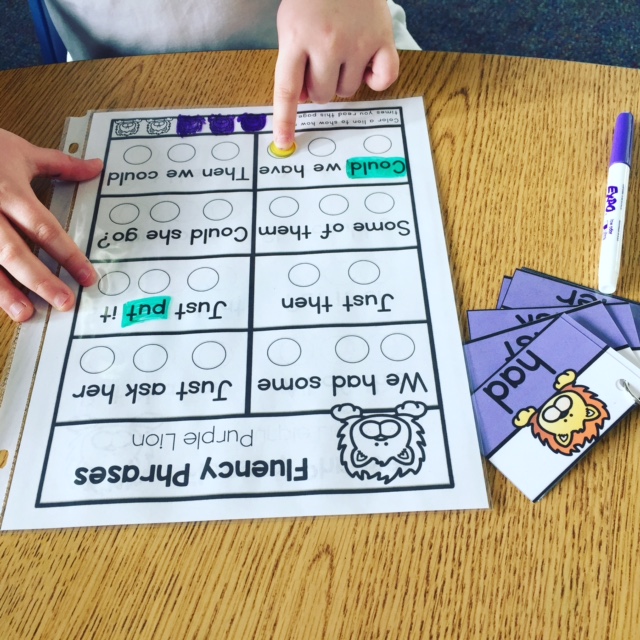
For some students, it can be helpful to include an extra step before moving to full sentences. Short phrases give students a chance to see how words work together while still keeping the text manageable. Phrases provide just enough context to build fluency without overwhelming students.
Reading Sentences
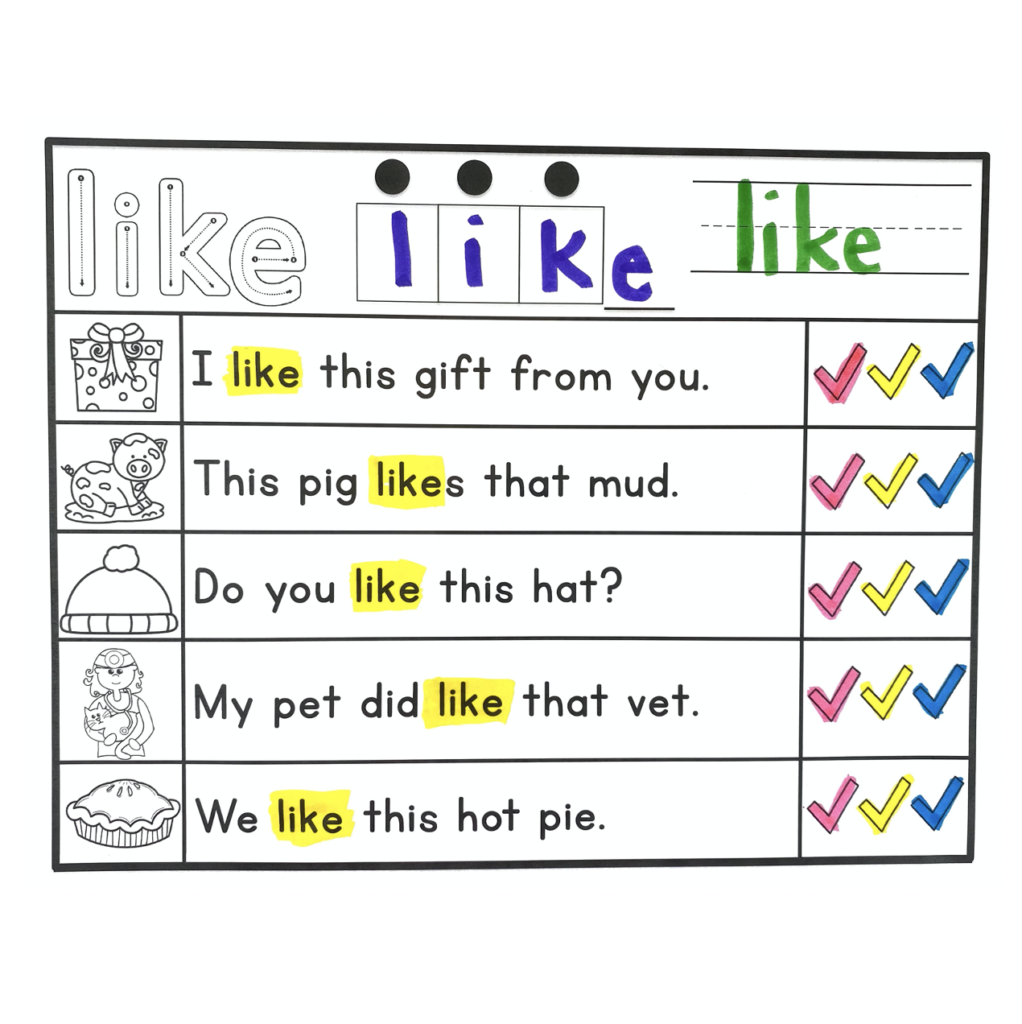
Provide students with sentences that include the target high-frequency word. Use words they already know, along with decodable words, so they can read successfully.
This gives students a chance to practice the word in connected text while building confidence and fluency.
Sentence Ladders
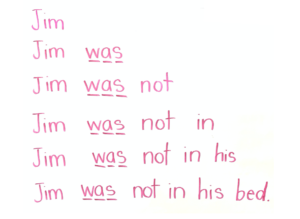
For students who need a little extra support, sentence ladders are a great way to build fluency. As students read slightly longer sentences, they repeatedly encounter the same words, helping those words become more automatic.
Which List: Dolch, Fry…or Neither?
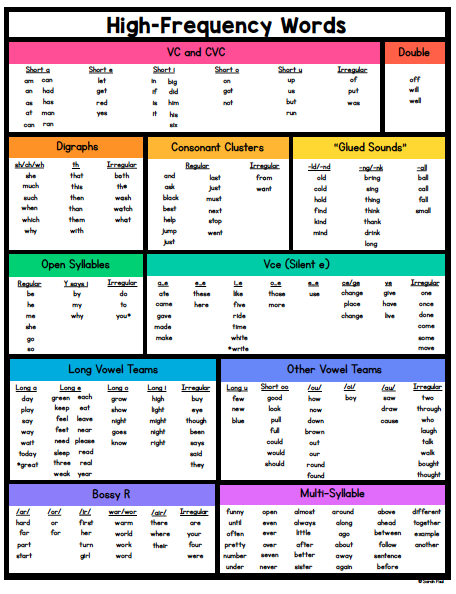
Traditional lists like Dolch and Fry are based on word frequency. Instead of following these lists in order, it can be more effective to group high-frequency words by phonics patterns and teach them alongside your phonics instruction. This allows students to apply what they know about sounds and spelling while learning new words.
High-Frequency Words Instruction Resources
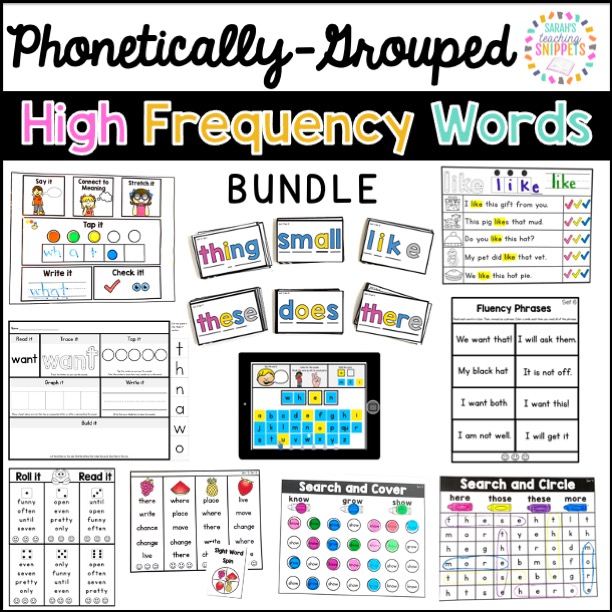
If you’re looking for a resource that aligns with this approach, I created a set of high-frequency word materials that are explicitly taught through phoneme–grapheme mapping and grouped by sound. The words are organized to match phonics instruction, making it easier for students to apply what they know about sounds and spelling. Each set includes targeted practice to help students map the words, notice any unexpected parts, and build automatic recognition over time.
I have two different options, depending on what you’re looking for.
Option 1: The Essentials for Teaching High-Frequency Words
This resource includes detailed information about how to teach 265 high-frequency words with flashcards and student practice pages included.
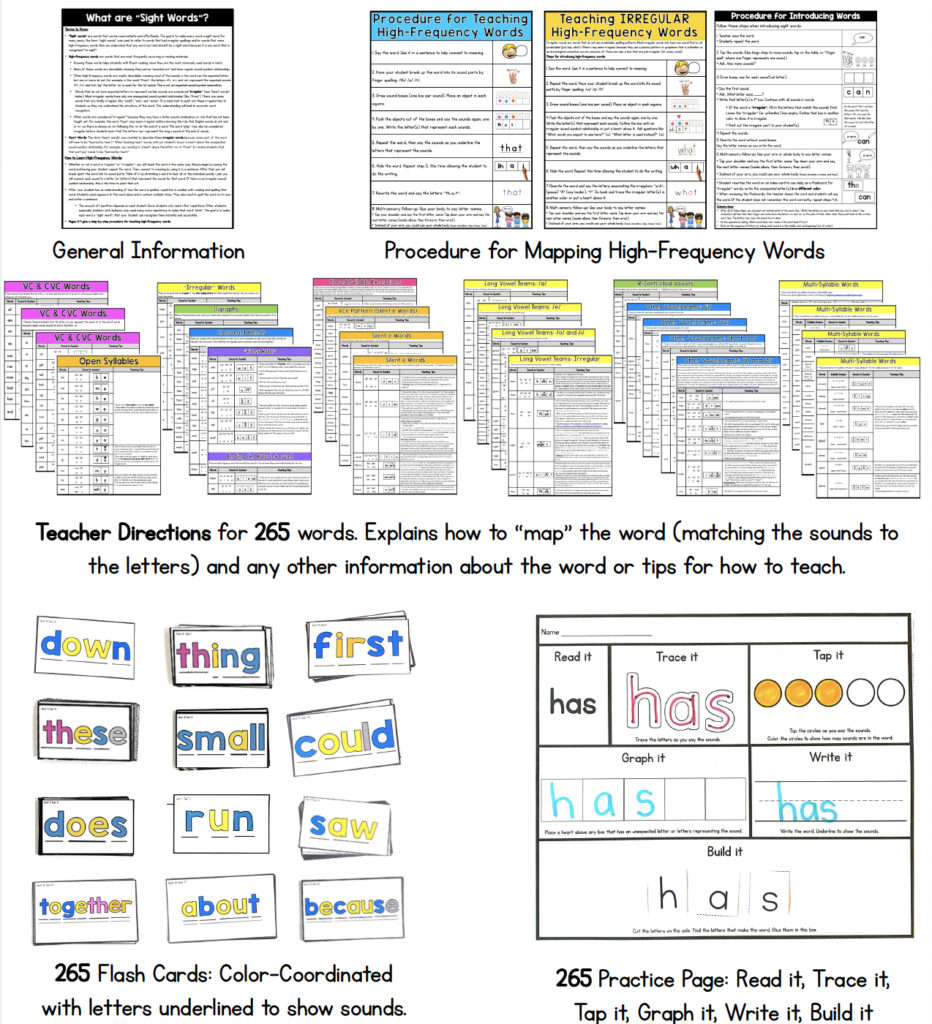
You can find this resource here.
These are decodable sentences, with each page focusing on one high-frequency word. There are 263 words total! If I had to pick one resource, it would be this one!
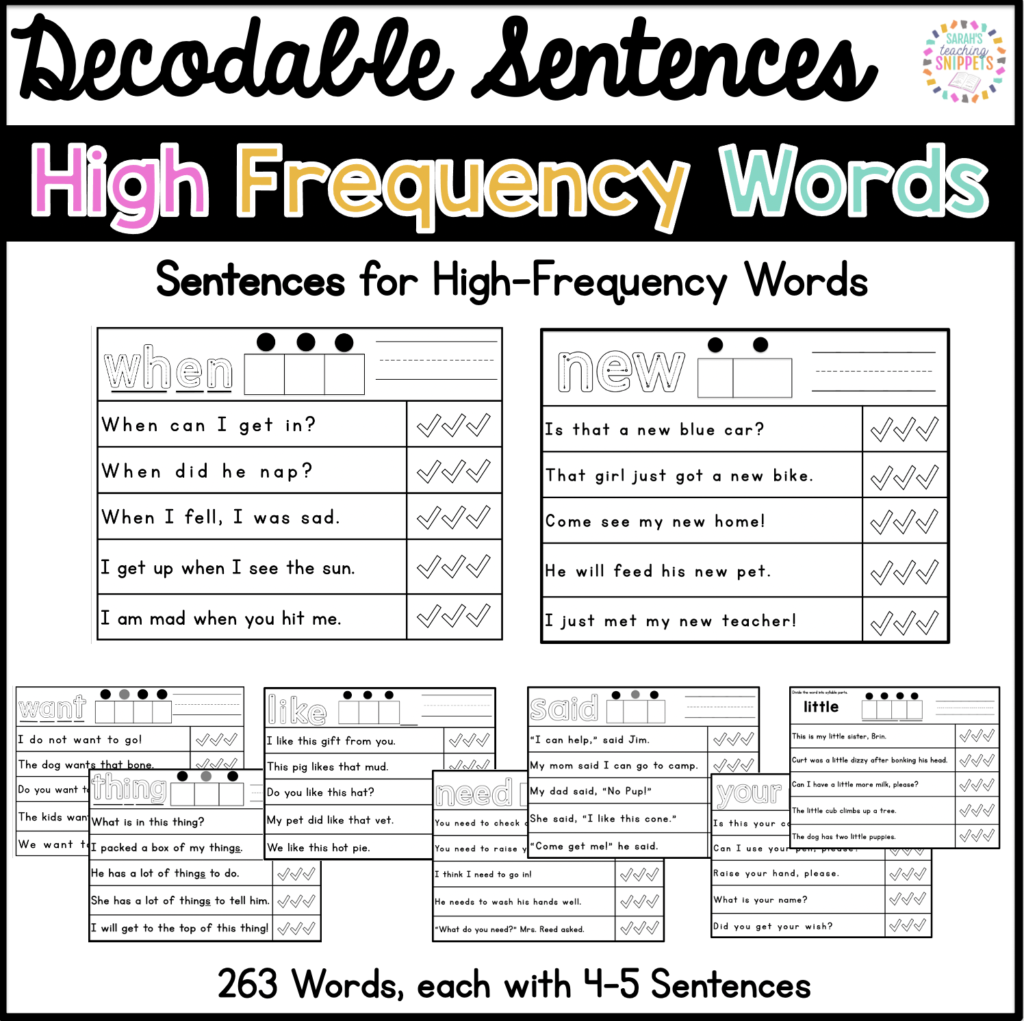
You can find the decodable high-frequency word sentences here.
Option 2: Six-Unit Bundle
If you’re looking for additional activities, you may be interested in this bigger bundle.
Each unit has the following items:
- Directions about how to teach the words using phoneme-grapheme mapping, along with any helpful tips.
- Flashcards are color-coordinated with vowels in one color and consonants in another color. There are also the underlines that represent sounds.
- “Fluency phrases” (“printable” option and smaller cards to laminate): Those are just short phrases with high-frequency words from that set.
- Word Searches
- Automaticity games (one for each set): Spin and Read or Roll and Read
- Sentences: Each word has a whole page of 4-5 sentences and then another page that reviews all the words from that set. Option with pictures or without.
- Tracking sheets
- Google Slides and Seesaw preloaded
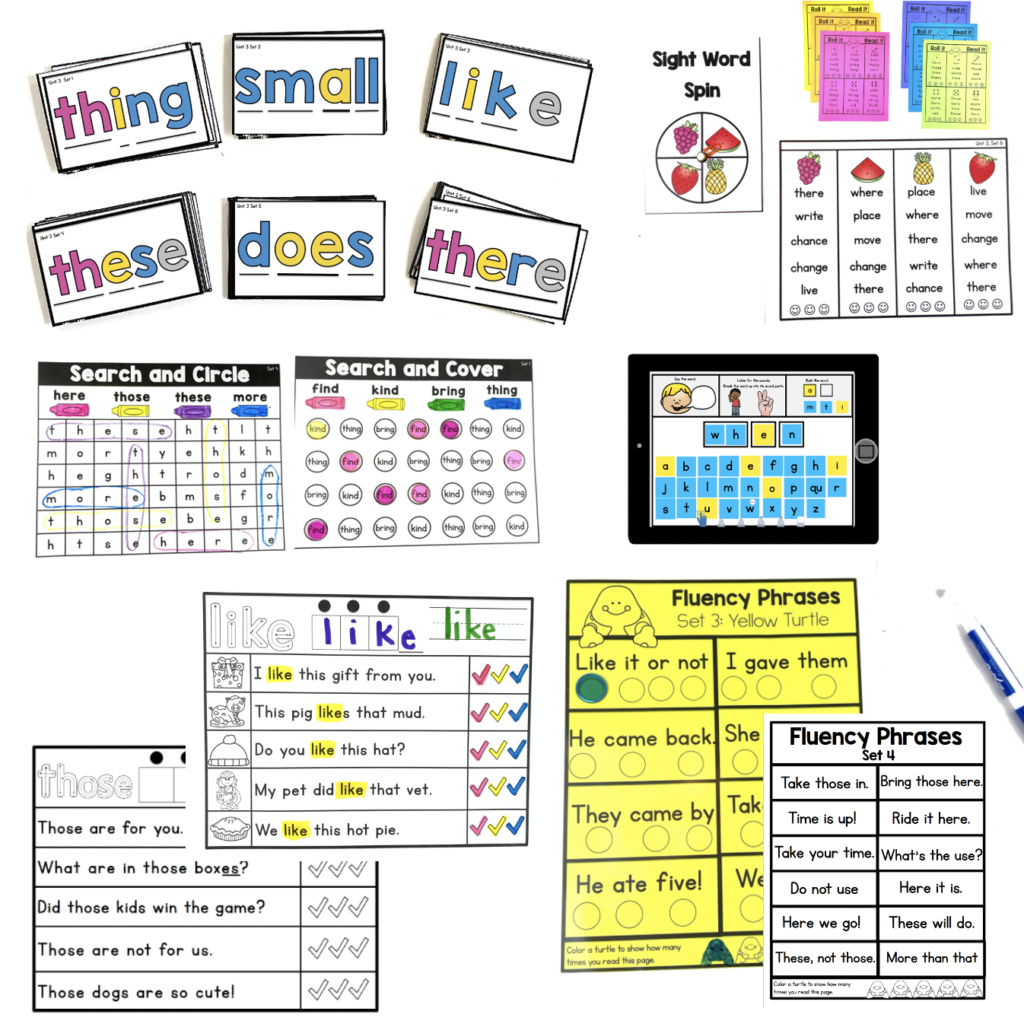
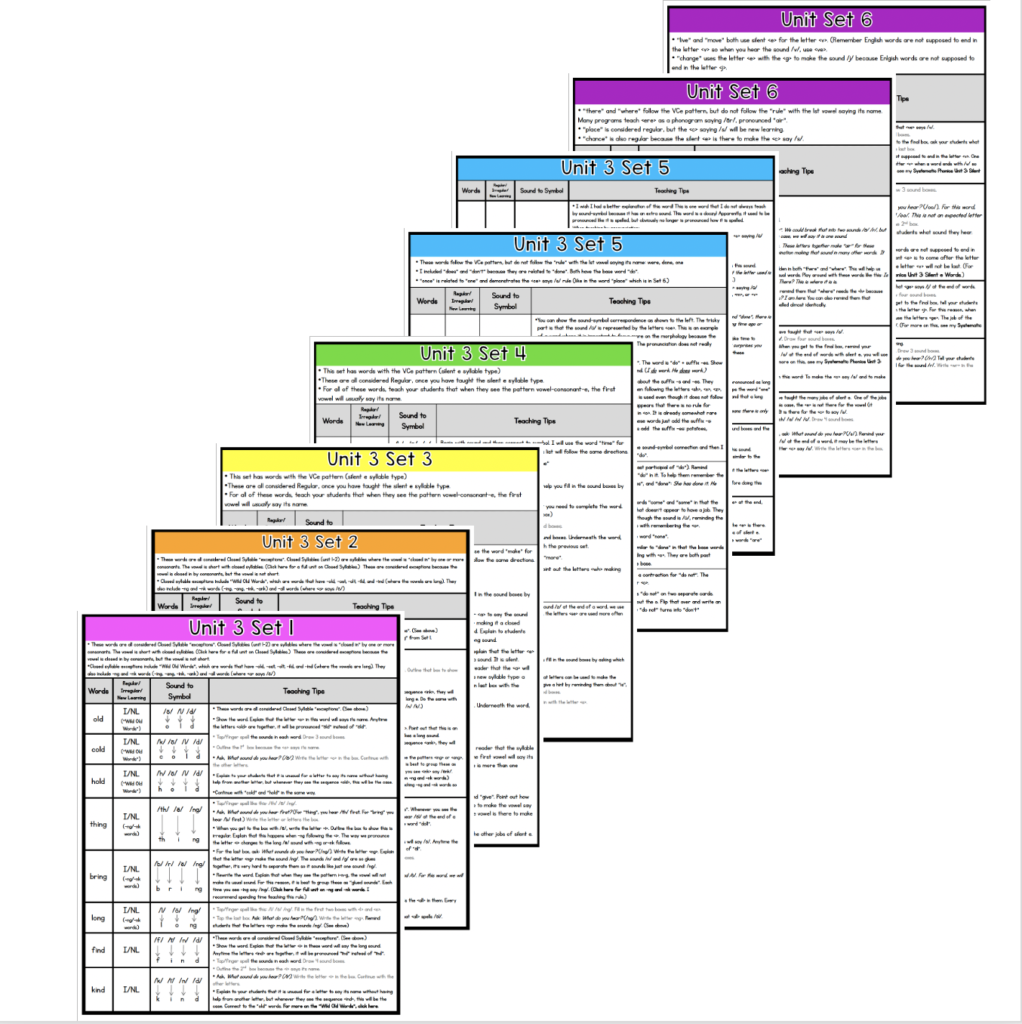
THIS LINK will lead you to the 6-unit bundle. If you just want to look at one unit, you will see a link to each individual unit from there.
References
David Kilpatrick’s books: Equipped for Reading Success and The Essentials of Assessing, Preventing, and Overcoming Reading Difficulties.
Louisa Moats: Speech to Print and LETRS books.
A Fresh Look at Phonics by Wiley Blevins.
Rethinking Sight Words. Article by Katharine Pace MilesGregory B. RubinSelenid Gonzalez‐Frey from the International Reading Association Journal.
Additional Posts about Sight Words
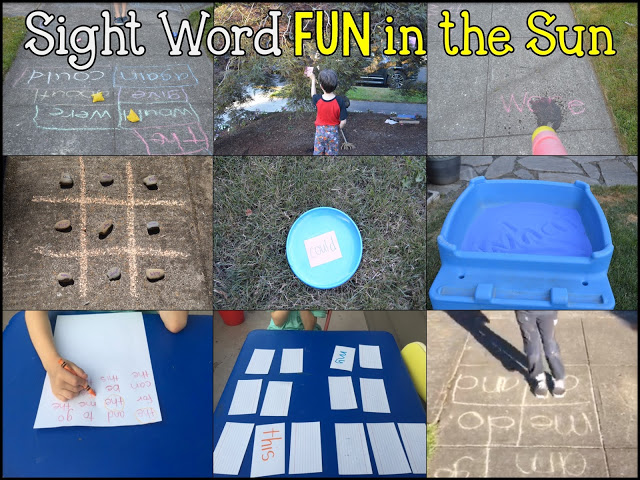
For another posts about sight words, click here. There, you will find ideas for the summer AND a printable pack for parents filled with ideas to practice sight words.
You can find this blog post here.