Have you ever wondered how students go from slowly sounding out words like s-a-t to instantly recognizing them? It’s not by memorizing words as whole pictures, but through a process called orthographic mapping, which makes words permanent and automatic.
What is Orthographic Mapping?
So what exactly is orthographic mapping? Orthographic mapping is the mental process our brains use to permanently store written words for instant recognition. (So basically, it’s how the brain takes a new word and makes it stick.) Once a word is mapped, we no longer need to “sound it out”. It’s locked into our long-term memory.
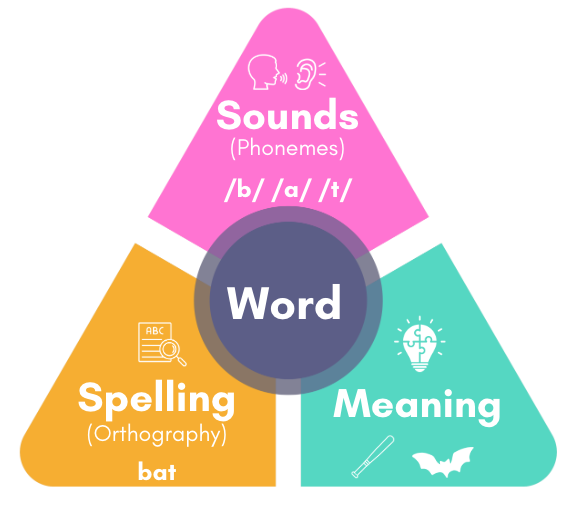
Orthographic mapping happens when readers connect: the sounds in a word (phonemes), the letters that spell those sounds (graphemes), and the meaning of the word.
The concept of orthographic mapping was first described by researcher Linnea Ehri, who studied how readers build a sight word vocabulary. David Kilpatrick has expanded on Ehri’s work.
The Big Picture: What Reading Requires
I should start with the big picture. Reading requires two skill sets: Word Recognition and Language Comprehension. Both are essential, but this post will focus on word recognition.
Word recognition requires phonemic awareness and letter-sound knowledge. With these foundations, students can begin the process of turning unfamiliar printed words into known words they can recognize instantly. That’s where orthographic mapping comes in.
What’s happening in the Brain
When we read, our brains don’t rely on one single “reading center.” Instead, several systems work together, most of them located in the brain’s language center. Researchers often describe this as four “processors” that each play a role:
- Orthographic Processor: Identifies and processes the letters and letter patterns we see on the page. Helps us remember letter sequences for spelling.
- Phonological Processor: Identifies, remembers, interprets, and produces speech sounds. Phonemic awareness (hearing and manipulating sounds in words) is just one of its jobs
- Meaning (Semantic) Processor: Connects the word to its meaning. Works with both the phonological and orthographic processors so that written words become meaningful language
- Context Processor: Uses background knowledge and surrounding sentence context to support understanding. Context is valuable for confirming meaning or self-correcting, but it cannot replace accurate word recognition.
The phonological and orthographic processors work closely together to build word recognition. They link the sounds in spoken words to the letters on the page, while the meaning processor ties those words to their definitions. This teamwork allows students to move beyond sounding out words toward recognizing and understanding them automatically.
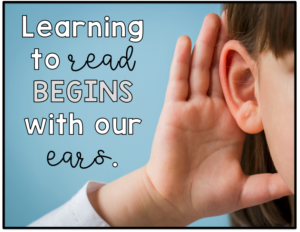
I often tell my kindergarten students that reading begins with our ears. They always laugh, because of course they think reading starts with their eyes on the page. But the more I’ve learned about how the brain processes words, the more I realize how true this is. Recognizing words in print depends first on being able to hear and work with the sounds in spoken language. That reminder has shaped the way I teach both reading and spelling.
The Whole-Word Reading Myth
For years, many of us were taught that students should memorize sight words by looking at them over and over. I used to teach this way too, with flashcards and drills. The idea was that if kids saw a word often enough, they’d store it in memory like a picture or a logo. But research shows that’s not how our brains really learn words.
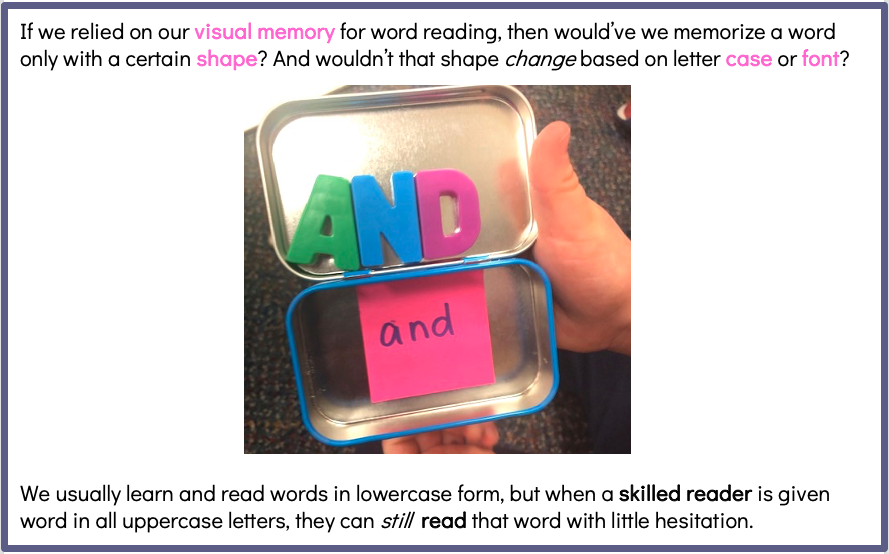
So if sight words aren’t stored visually, how do they become automatic? The answer is orthographic mapping.
Orthographic Mapping: How words become “sight words”
When students first learn to read, they sound out most words letter by letter. Over time, many of those words become instantly recognizable. Those are what we call sight words. But sight words aren’t memorized as whole shapes. They become automatic because of orthographic mapping.
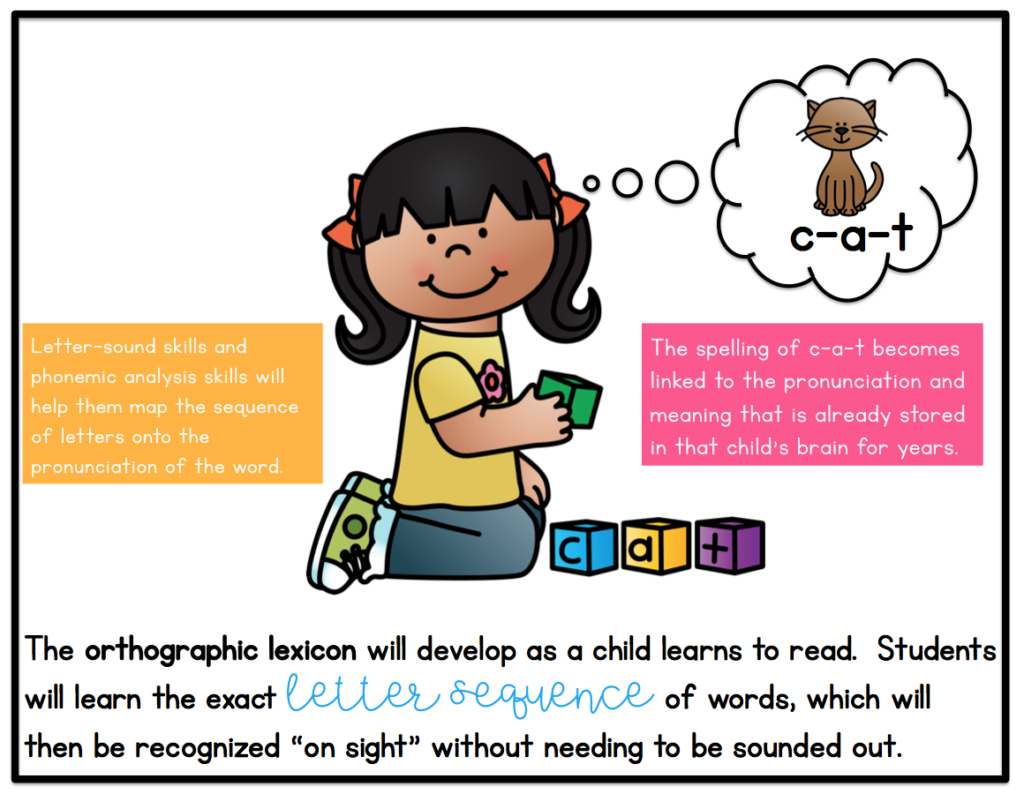
As David Kilpatrick explains, the brain takes the oral pronunciation of a word (already stored in memory from spoken language) and anchors it to the correct letter sequence. With enough accurate encounters, those connections are permanently stored, allowing the word to be recognized instantly without decoding.
Some students pick up this process quickly. Others need more explicit instruction and repeated practice to strengthen those connections.
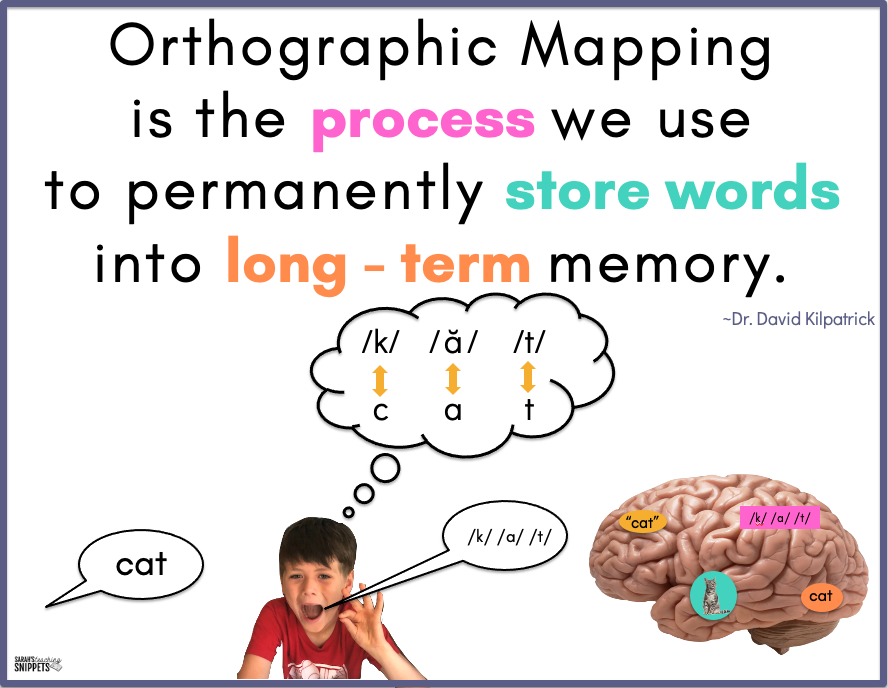
From Phonological Lexicon to Orthographic Lexicon
Long before children ever see print, they already know thousands of words by sound. All of those spoken words are stored in what researchers call the phonological lexicon, which is essentially the brain’s mental “dictionary of sounds.” This is why even very young children can tell the difference between cat and hat, even though the words differ by only one sound. They recognize the sound sequence, connect it to meaning, and know whether we’re talking about a furry pet or something you wear on your head.
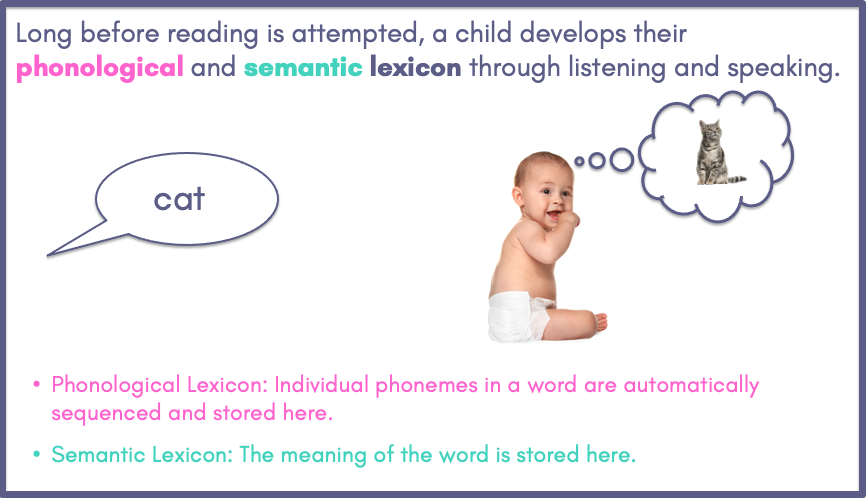
When students begin learning to read, those spoken words provide the foundation for building an orthographic lexicon, which is a mental dictionary of written words and common word parts.
By adulthood, skilled readers have between 30,000 and 80,000 words in their orthographic lexicon (Crowder & Wagner, 1992; Rayner&Polletsek, 1989; Kilpatrick & O’Brien, 2019). Think of it as a giant mental database or dictionary! Every time you read or write, your brain instantly retrieves the spelling, pronunciation, and meaning of words without conscious effort. Words in the orthographic lexicon require only 1/20th of a second exposure for reliable recognition!
The speed and ease of reading depend on how strongly those three pieces are bound together in memory: sound, spelling, and meaning. Orthographic mapping is the process that makes those connections stick, storing words for instant recognition.
This is also why oral language is such a critical foundation for reading. The more words a child knows by sound, the more “hooks” they have for attaching new words they see in print.
Let’s look at how this orthographic lexicon is developed.
Learning To Read
When students first see an unfamiliar word, the process starts with decoding. They connect letters to sounds (grapheme–phoneme knowledge) and then blend those sounds together to pronounce the word.
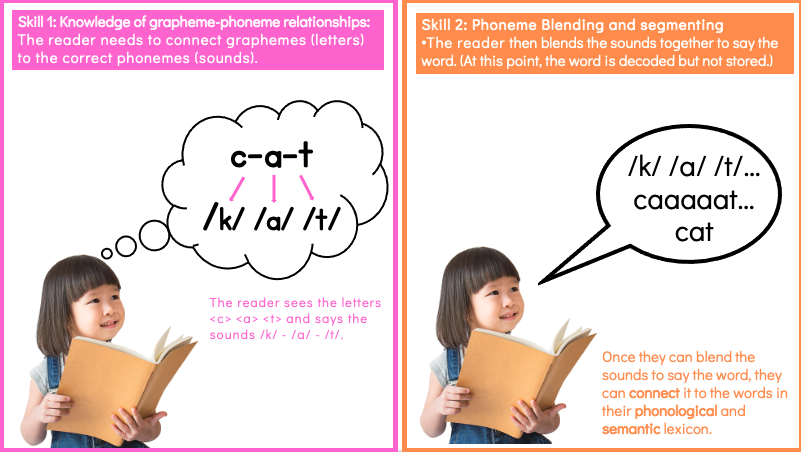
Decoding is an essential skill. But by itself, decoding does not guarantee that a word will be remembered for the future. This is where orthographic mapping comes in.
Orthographic Mapping in Action: The Process of How Words Get Stored for Instant Recognition
With decoding, students move from parts to whole: they take individual sounds and blend them into a word.
With orthographic mapping, the brain works in the opposite direction. It takes the whole known word (already in the child’s oral vocabulary) and connects it back to its parts, anchoring each sound to the correct letters. This process is what stores the word permanently in memory.
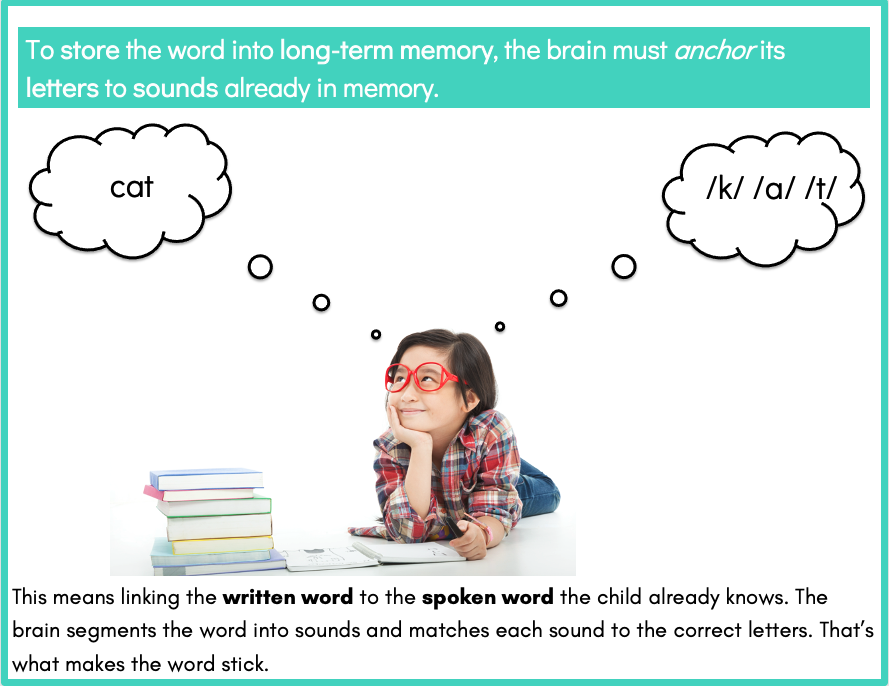
Orthographic mapping is the process that makes the word stick.
Here’s what the whole process looks like: the spoken word is pulled apart into sounds, linked to letters, and stored in memory for instant recognition.
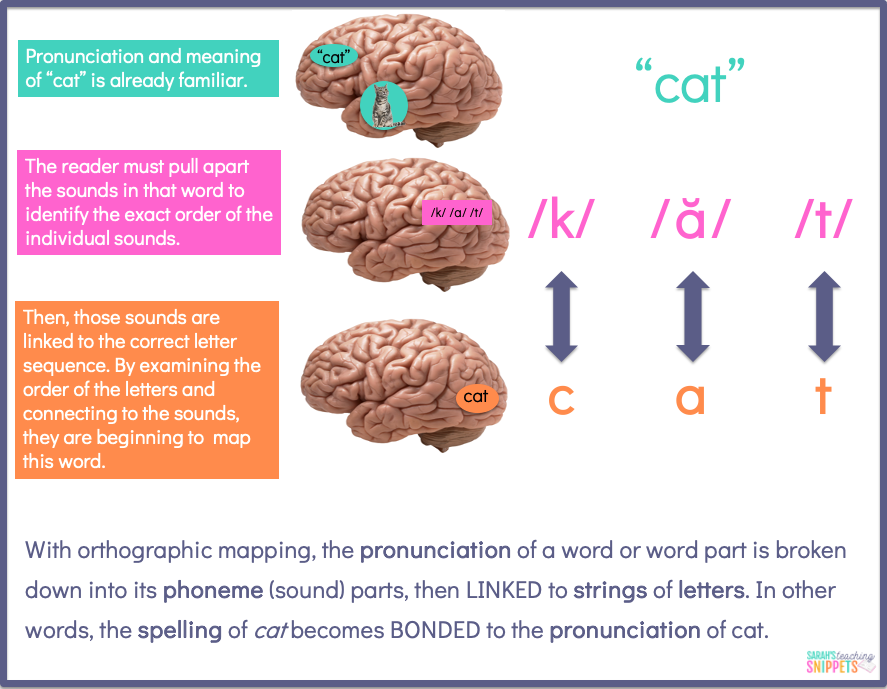
Over time, with enough accurate encounters, the word becomes part of the student’s orthographic lexicon. Once it’s mapped, the word can be read instantly, without sounding it out.
Activities that Promote Orthographic Mapping
So far, we’ve looked at how the brain stores words for instant recognition. But how do we support that process in the classroom? That’s where word mapping comes in.
Orthographic mapping is what the brain does. Word mapping is what we do in instruction to support it.
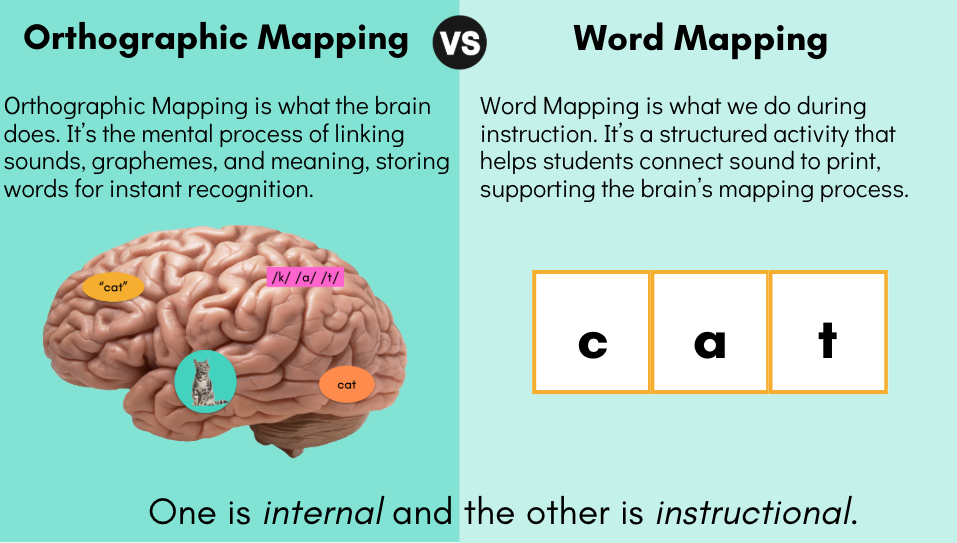
How Word Mapping Works
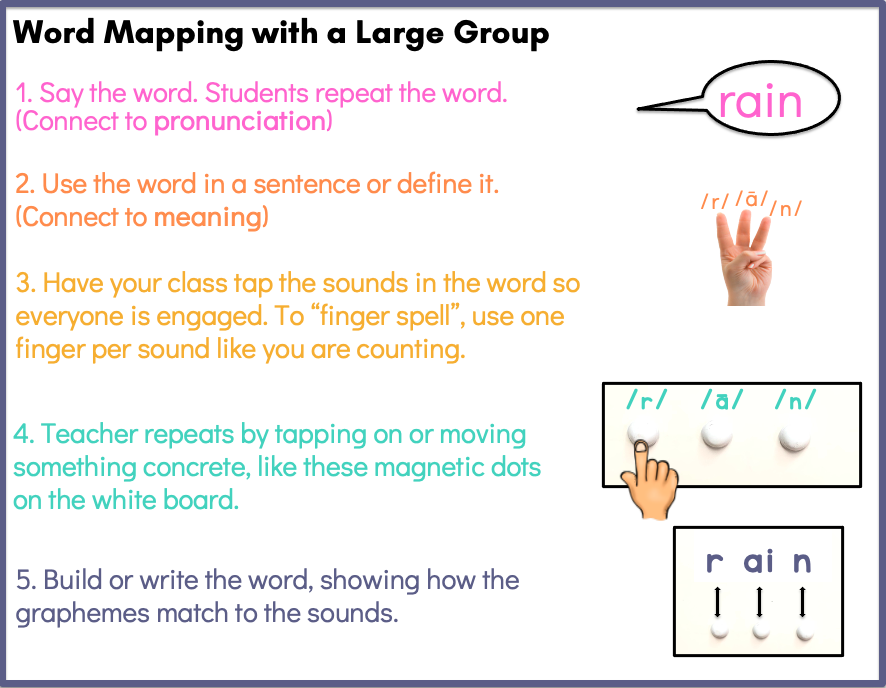
Word mapping is a way to make the process of orthographic mapping visible to students. Instead of just looking at a word and trying to remember it, students break the word apart and connect each sound to its letters. This routine gives them a concrete way to practice the very steps their brain needs in order to store words for automatic recognition.
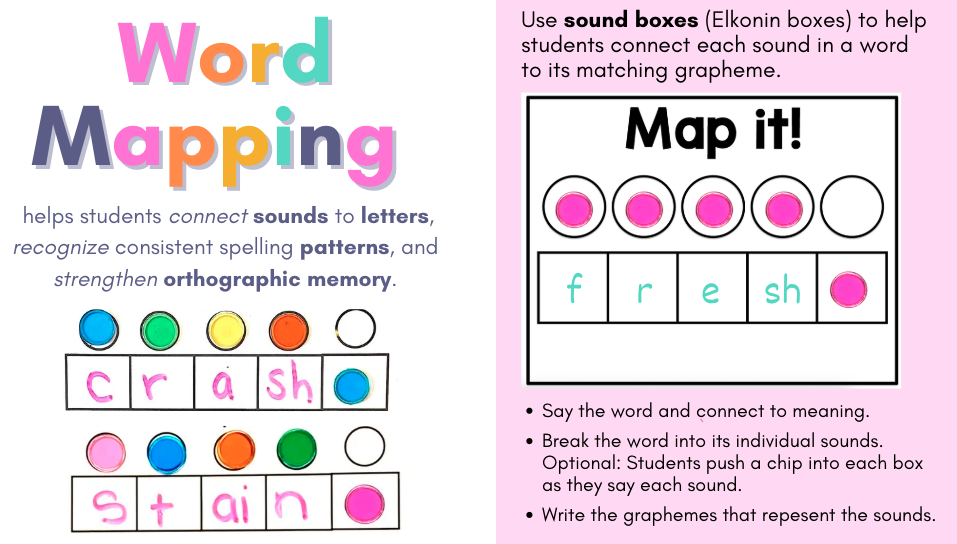
Orthographic mapping is the mental process that makes words stick. Word mapping is the instructional practice we use to support it.
With a larger group, you can have students tap the sounds with their fingers while you model on the board. I like to use magnets for sounds and then letter tiles (or dry-erase marker) for the letters.
Using sound boxes (also called Elkonin boxes) is a simple, powerful way to bring word mapping to life.
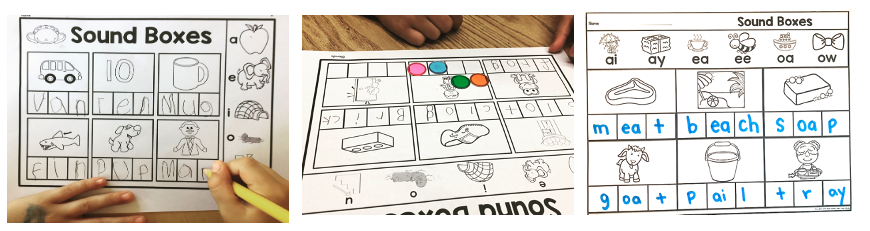
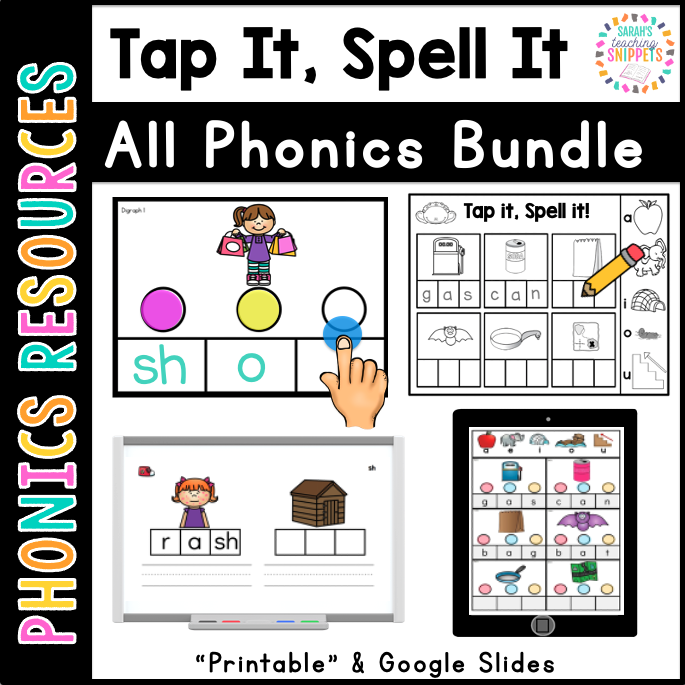
If you want ready-to-use materials for this, I’ve created a Sound Boxes resource with printable worksheets and digital Google Slides for every phonics skill. These materials give you everything you need to practice word mapping in small groups, whole class lessons, or independent centers.
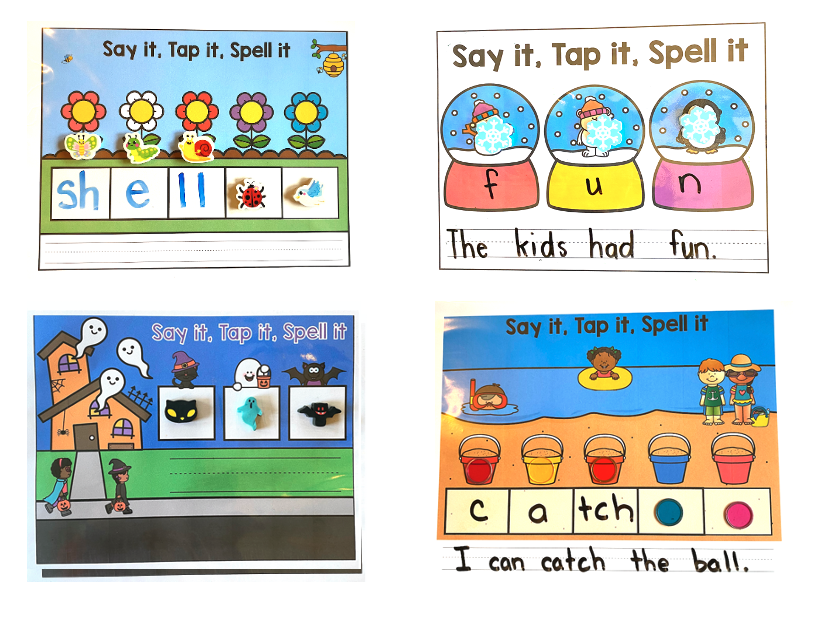
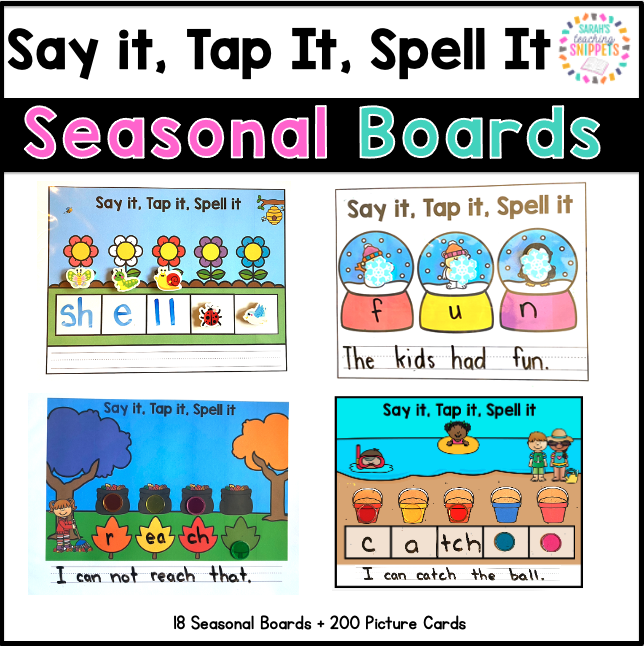
Now you don’t have to get fancy, but it can be fun to add a touch of seasonal flair with different boards. These are great for small group work. Print one per student and place in a plastic sleeve. Say the word and have your students use manipulatives (bingo chips or fun mini erasers) to “tap” the sounds. Then, use a dry-erase marker to write the letter or letters that spell each sound.
How Do “Irregular” Words Fit In?
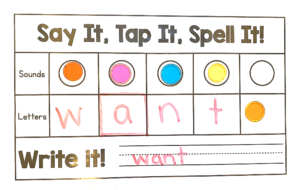
Orthographic mapping isn’t just for regular, predictable words. It works for irregular words too. “Irregular” Words are words that have an unexpected spelling for a sound. For example, in the word “what”, you don’t expect the letter <a> to spell the short u sound. Most of these words have some parts that match the usual sound–spelling patterns. The goal is to map the regular parts and then give students tools for remembering the irregular ones.
Here is the process for using word mapping to introduce high-frequency words:
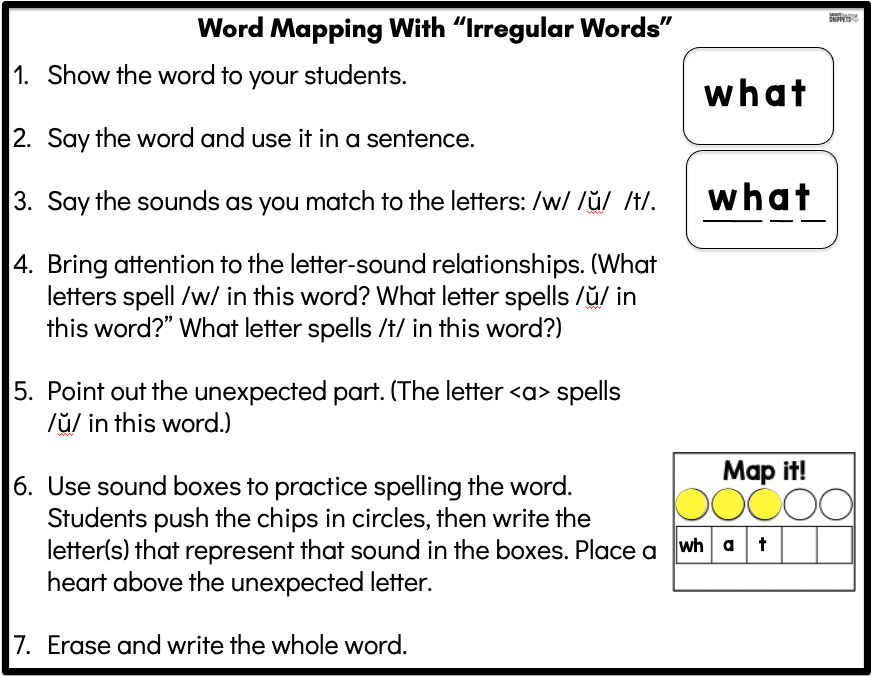
Here’s another example with the word “want”. Notice how I put a box around the “irregular” part. You can also put a heart above that letter.
Other Tips for Irregular Words
Here are a couple of other tips for “irregular words”:
Use a spelling pronunciation: Sometimes it helps to pronounce the word the way it looks before reading it the normal way. For example, pronouncing was like “waz” or saying often with the /t/ sound can highlight the letters that don’t follow the typical pattern.
Connect to meaning or relatives. Pointing out connections can also make irregular words stick. For instance, to help with the word does, show your students how it is actually do + es (base + suffix). Connect it to its relatives doing and done. This helps students anchor the unusual spelling in a meaningful way. (For more about morphology, click here.)
The key here is that irregular words can still be mapped by linking as much as possible to sounds and patterns students know, while giving extra attention to the parts that are less predictable.
Phonemic Proficiency and Orthographic Mapping
To store words in long-term memory, students need more than just basic skills like blending and segmenting. They also need phonemic proficiency, which is the ability to automatically and fluently manipulate the sounds in spoken words.
Phonemic proficiency is what allows readers to pull apart a spoken word, connect each sound to its spelling, and anchor the word in memory. It’s not just being aware of sounds. It’s being able to work with them quickly and effortlessly.
Kilpatrick says that typically developing readers often develop these skills naturally as they engage in phonics instruction. They can analyze words phonemically without much extra support or instruction.
Struggling readers, on the other hand, typically do not develop phonemic proficiency on their own. Without this ability to manipulate sounds automatically, they cannot easily anchor spoken words to their spellings, which means orthographic mapping doesn’t happen naturally for them. That’s why guided practice with phoneme manipulation is so powerful.
Note: Kilpatrick emphasizes that segmentation and blending are necessary foundations, but they are not sufficient. Phonemic proficiency develops when students can manipulate phonemes fluently, and this is what supports orthographic mapping.
Building Phonemic Proficiency with Manipulation Tasks
One of the best ways to strengthen this skill is through phonemic manipulation tasks. It’s important to remember, though, that the tasks themselves are not the goal. Phonemic proficiency is the end goal. Phonemic manipulation tasks are the practice routines we use to develop that proficiency.
Examples of Phoneme Manipulation Tasks
Phoneme manipulation can take different forms. Here are some examples you can try with students.

These types of activities exercise both phonological working memory (holding sounds long enough to manipulate them) and phonemic awareness (analyzing and changing the sounds).
Remember, this kind of advanced phonemic awareness instruction is for students who are having difficulty with reading, since it directly supports their ability to build an orthographic lexicon. These activities should be brief (a few minutes) and targeted.
Levels of Support
Students vary in how easily they can do these tasks in their head. When needed, you can give more support:
- With manipulatives: Have students push a chip for each sound, then physically remove or replace a chip as you guide them through the change.
- With guiding questions: Prompt step by step: “Say map. Push the sounds. Now take away the /m/. What do you have?” (ap). Then add: “Now put /s/ in front. What word is that?” (sap).
- In their head: As skills grow, reduce prompts and manipulatives. The goal is for students to manipulate phonemes mentally without external supports.
Resources
Ready to go Sound Boxes for every phonics skill can be found here.
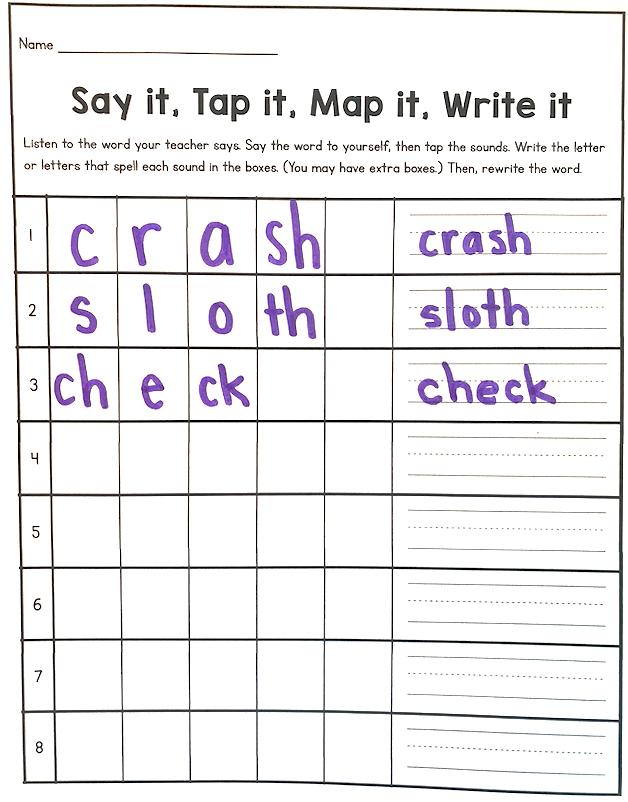
If you’re looking for a simple page to practice phoneme-grapheme mapping, click here for this freebie!
If you like the seasonal boards, I have several options (with picture cards) here.
References for Orthographic Mapping
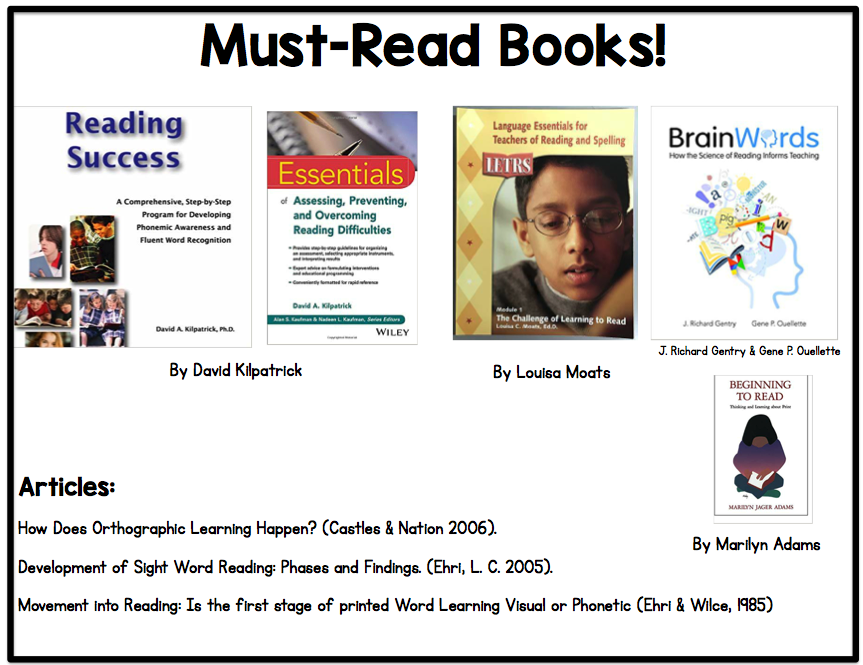
The majority of information from this post can be found in David Kilpatrick’s books and articles from Linnea Ehri.
I also recommend Brain Words How the Science of Reading Informs Teaching. So much great information.
Related Blog Posts
For more about how to teach reading, click here.
For more about the Science of Reading, click here.
For more about dyslexia, click here.
Resources
I have tons of resources for phonic decoding and spelling!
If you’re looking for a systematic approach to reading and spelling, click HERE to check out these units.
I also have a few different phonemic awareness resources (printable and hands on). Click here for those.
I also have several printable intervention packs, like the one shown below. Click here to get to those.