What Are Sentence Pyramids?
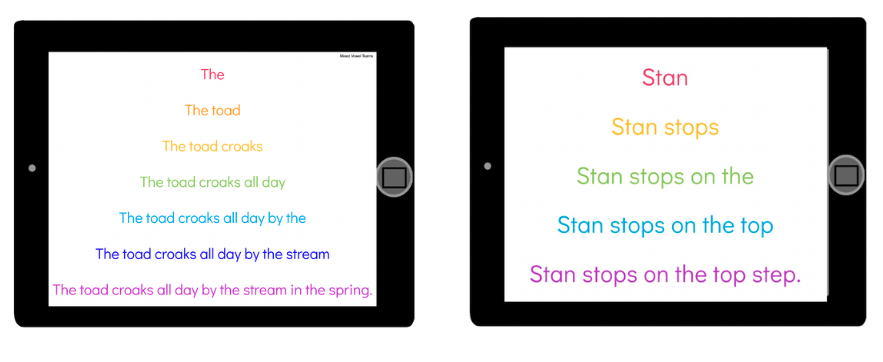
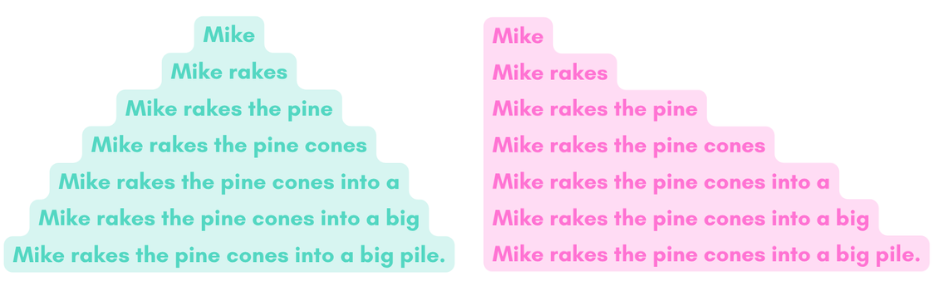
A sentence pyramid (or sentence ladder) builds a sentence one word at a time, adding one word on each line until the full sentence is formed. Students read each line, getting repeated practice with the words as they build toward reading the full sentence. For beginning or struggling readers, decodable sentence pyramids can provide repeated, supported practice with decodable words while helping them build toward reading full sentences.
Why Sentence Pyramids Work
When used intentionally, sentence pyramids can help students move toward automatic word recognition and more fluent sentence reading. Because words are repeated on each line, students have multiple opportunities to move from decoding those words to recognizing them more automatically.
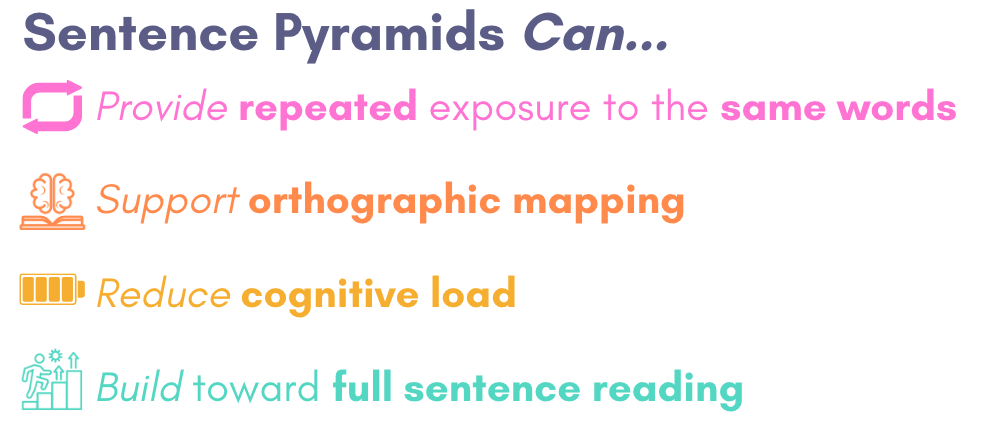
A sentence pyramid breaks reading into manageable steps (quite literally), which can help students who feel overwhelmed by full sentences. It gives them the momentum they need to move from decoding words in isolation to reading full sentences.
When Sentence Pyramids Are Most Helpful
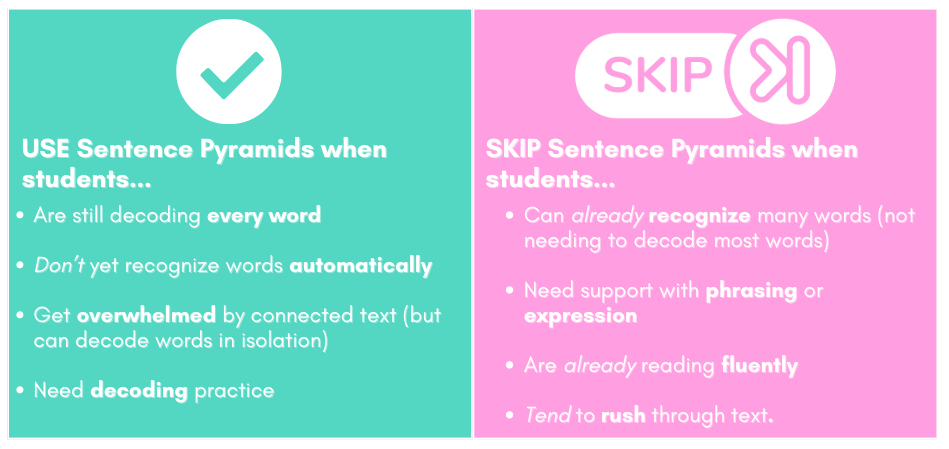
Presenting sentences in this structure can be incredibly helpful for students who are still developing decoding and word recognition skills.
If you have a student who needs to sound out nearly every word in a sentence, sentence pyramids are a great fit.
Instead of asking them to tackle an entire sentence at once, which can feel really overwhelming, they are working with just one word at a time and gradually building up. Each line gives them another opportunity to decode and then reread the same words, helping them become more familiar.
Over time, this repeated, supported practice helps students move away from sounding out every word and toward recognizing words more automatically, making it easier for them to read full sentences with greater ease.
You may see sentence pyramids used for general fluency practice, but I’ve found they’re most effective when used with students who still need support with decoding and word recognition. Sentence pyramids can be a very effective tool, but they are not necessary for everyone. This may be an unpopular opinion, but you can read on and decide for yourself 😉
When to Use Something Else
Not all fluency challenges are the same. Fluency is not a single skill. It’s made up of different components. (Read more about fluency here.) That means our instruction should be targeted, and we need to respond with the right kind of support.
Let’s take a step back and think about what happens when a student reads a sentence pyramid. They read the first word, then move to the next line and see that same word again, along with a new one.
For a student who already recognizes that word automatically and doesn’t need to decode it, what is that repetition doing? In many cases, it can actually slow them down. Instead of supporting fluent reading, it can interrupt the natural flow of the sentence.
If a student can already recognize most words automatically but struggles with phrasing, pacing, or expression, sentence pyramids are probably not the best fit. In those cases, consider:
- Phrase-cued reading or scooping phrases
- Repeated reading of connected text
- Modeled fluent reading
- Echo or choral reading
These approaches better support phrasing and prosody and help students move toward more natural, fluent reading. (Read more about fluency here.)
Decodable Sentence Pyramids
If you have students who would benefit from this kind of support, I’ve created decodable sentence pyramids organized by phonics skill. These are not a new resource either! I’ve been using these for years, so they are tried and true!
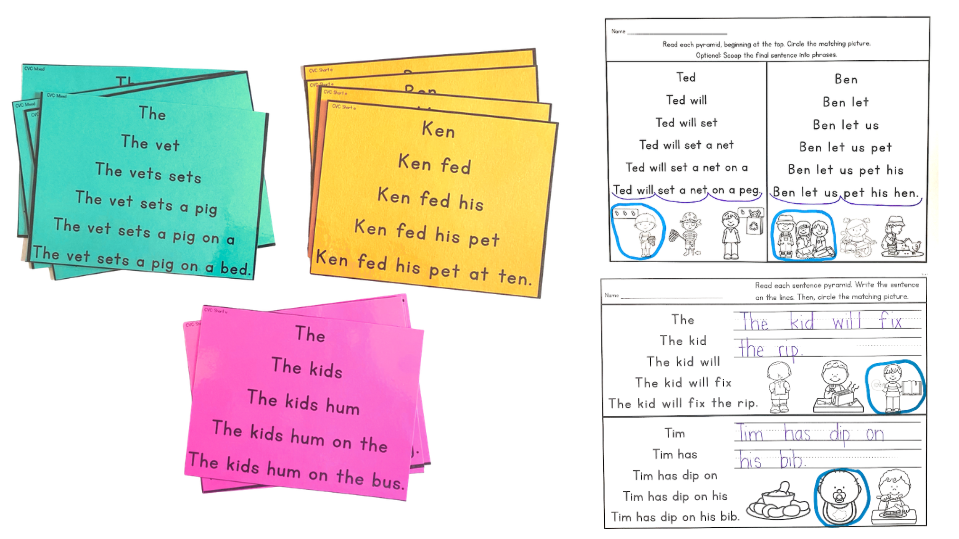
Each set includes sentence pyramid cards that can be laminated, as well as a printable option. (The short vowel and silent e have two printable options, like the ones shown above.)
There is a set focusing on CVC words, digraphs, blends, silent e, vowel teams (long vowels), r-controlled vowels, and other vowel teams/diphthongs.
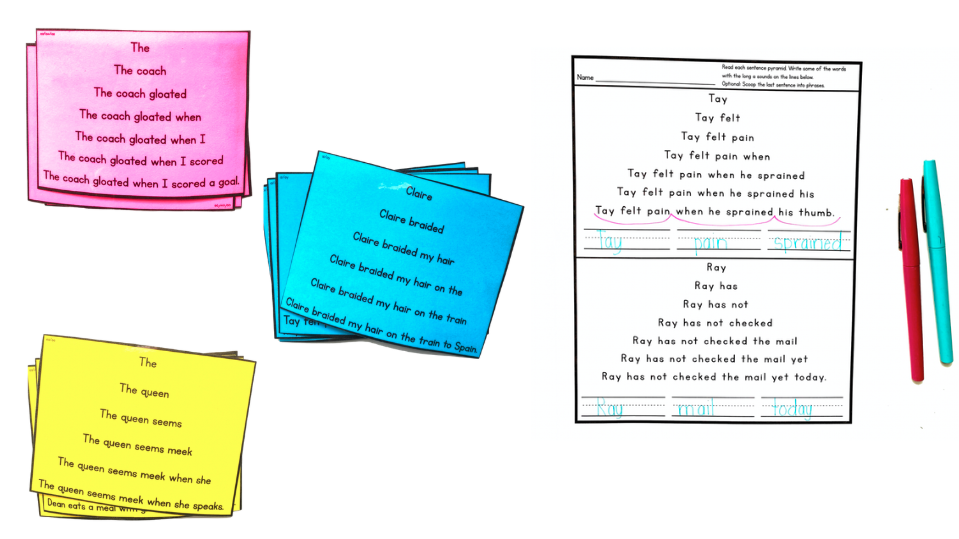
There is also a digital component, so you can project a sentence for a class or small group, or use it individually with iPads.