You are here: Home/Uncategorized/ Sentence Building by Connecting Phrases
Sentence Building by Connecting Phrases
Sentence building is a powerful way to support developing readers.One of my favorite routines is building sentences with decodable phrases. I come back to this activity again and again in small groups, whole-group lessons, and centers because it supports decoding, fluency, and grammar—all in just a few minutes a day.
This isn’t just about putting words together. It’s about giving students the right kind of practice—one that supports decoding, fluency, and even grammar—all in just a few minutes a day.
Why Decodable Phrases Work
For many students, reading a full sentence can feel overwhelming. Decodable phrases break it down. We read just one phrase at a time—starting with decoding each word, then rereading the whole phrase together using a scooping hand motion. This helps students move from word-by-word reading to phrased, fluent reading.
Once we’ve mastered the first phrase, we move to the next. But here’s the fun part: we only change one phrase at a time. This gives students repetition and predictability while also introducing something new, just enough challenge to keep them engaged.
We build the sentence together, rereading as we go:
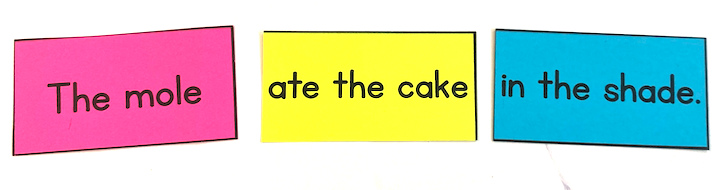
Phrase 1 (For beginning readers: decode word by word then reread as a phrase)
Phrase 2 (For beginning readers: decode word by word then reread as a phrase)
Read the phrases together
Phrase 3 (For beginning readers: decode word by word then reread as a phrase)
Read all three phrases together, pausing between each phrase
Swap one phrase for a new one
Repeat!
It becomes almost like a game, and students start to notice how one phrase can change the meaning:
Did the who change?
Did the action change?
Did the when or where change?
With this sentence-building activity, not only are they decoding, they’re thinking.
Sentence Building Activities for the K–2 Classroom
One of the things I love most about this activity is how flexible it is. You can use it with:
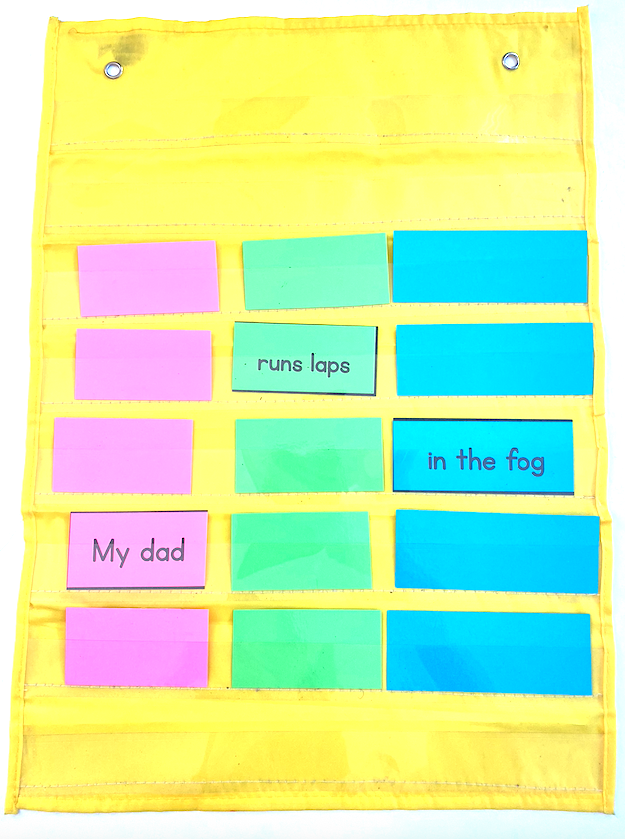
A small group using a mini pocket chart (Click here to watch a reel about this.)
A whole group at the carpet using larger phrase strips
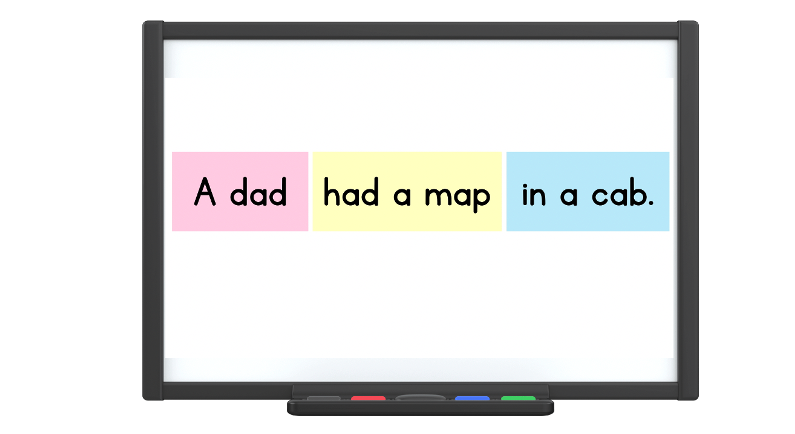
A digital version with Google Slides—perfect for projecting. Each slide changes just one phrase so students get repetition and novelty together. Click here to watch a reel of what this looks like.
You can also turn it into a center or a group challenge: Set up a pocket chart with options for each part of a sentence (who, what, where/when). Give students a few minutes to whisper-read different combinations. Then call on a few to share and read their sentence aloud—real or silly!
You can also make it a big reveal. Have the cards facedown and call on students to flip over one phrase at a time. Read the phrases and see if the sentence makes sense! If it doesn’t, choose which phrase you’ll switch out.
Bonus: It’s a natural way to introduce concepts like subject, predicate, and time/place phrases without a formal grammar lesson.
How This Activity Supports Fluency
Fluency isn’t just about reading fast—it’s about accuracy (reading words correctly), automaticity (recognizing words effortlessly), and prosody (reading with appropriate expression and phrasing). This sentence-building routine supports all three. Students start by decoding each word, reinforcing accuracy. Then, with repeated exposure to similar phrases, they begin to read more automatically. Finally, by rereading in scooped phrases and practicing where to pause, students develop prosody. All of this happens naturally within a short, engaging sentence building routine that can be repeated daily. If you’re looking for sentence building activities that support fluency, decoding, and comprehension, this routine can make a big difference.
Want to Try Sentence Building with Decodable Phrases?
If you’re looking for an easy way to bring decoding, rereading, and sentence sense together, this sentence building routine might be your new favorite go-to.
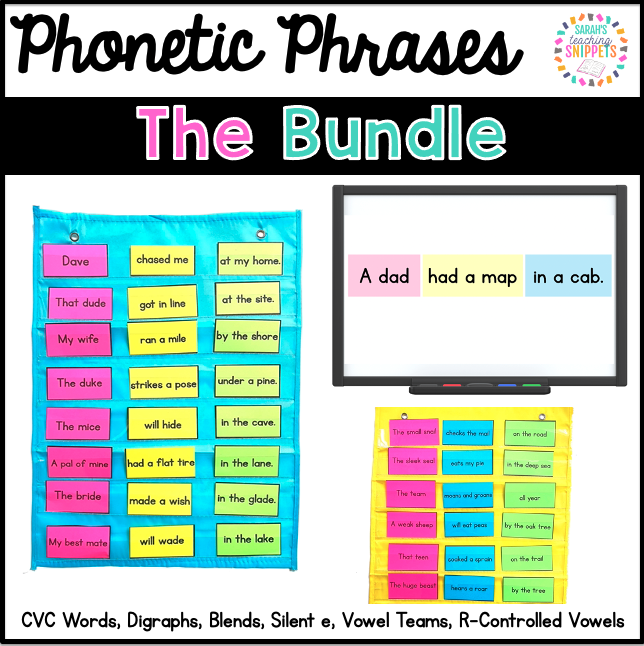
All the phrases are decodable and organized by phonics skill: CVC words, digraphs, blends, silent e, vowel teams, and r-controlled vowels. They align with a typical phonics scope and sequence, so you can match them to your current instruction. I’ve bundled all the phonics sets together to make it easy to differentiate or spiral back as needed. (But they are also sold separately by phonics skill).