Word chains are a simple yet powerful routine that builds phonemic awareness, decoding, spelling, and word recognition together. This is a routine worth revisiting regularly within your literacy block during your dictation time.
What Are Word Chains?
A word chain is a sequence of words where each new word changes by only one sound or spelling. Students are asked to spell a word, then instead of giving them a totally different word, they are asked to change one sound to spell a new word. (And it’s important to note that changing one sound doesn’t necessarily mean just one letter is different.)

Each step requires students to:
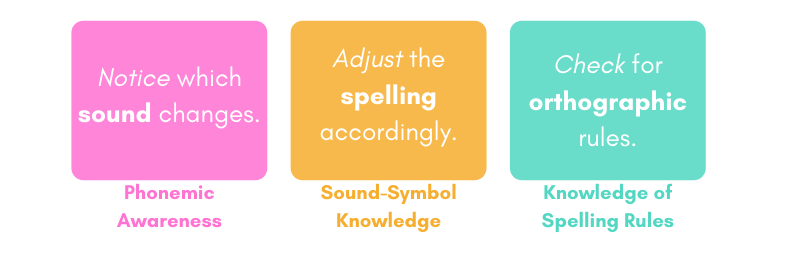
This activity keeps the focus on sound-symbol relationships and phonics knowledge, not guessing or memorization.
Word chains can be used for:
- Decoding (reading the words)
- Encoding (spelling the words)
- Or a combination of both
They work beautifully in whole group, small group, intervention, and even partner settings.
Word Chain Instructional Routine:
Option 1: Encoding (Spelling-Focused)
- Say the first word (sat).
- Use it in a sentence or define it. (Connecting to meaning is an essential step! This can be very quick, though.)
- Students spell the word using letter tiles or write it.
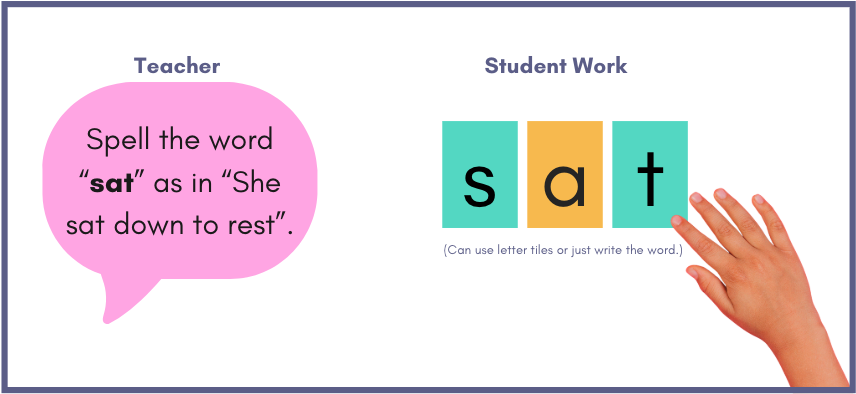
4. Say the next word: Change “sat” to “sad”.
5. Students change <t> to <d>.
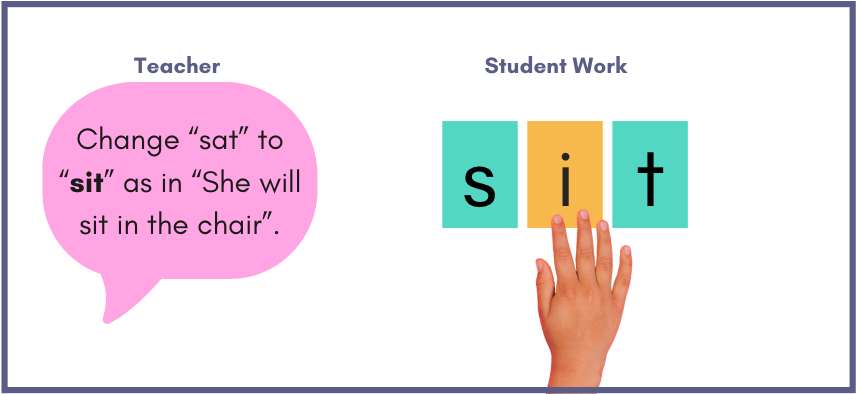
6. Continue through the chain.
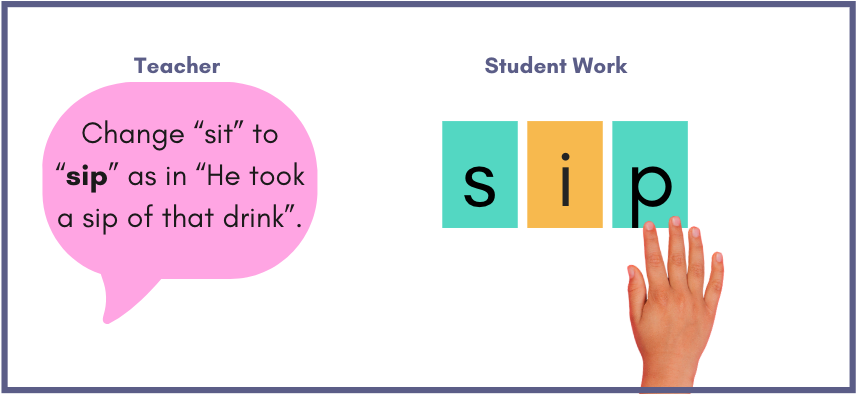
Option 2: Decoding (Reading-Focused)
For a reading-focused word chain, students build or write the words and then read them.
- Build or write the first word together.
- Students decode it: /s/ /a/ /t/… sat.
- Tell students which letter or sound to change: Change <a> to <i>.
- Students make the change.
- Read the new word. Students read “sit”.
- Continue through the chain.
- When you ask a student to change something, you can say a letter name or sound. For example, “change /a/ to /i/. What’s the new word?
You can also mix both approaches by reading some steps, spelling others.
Here is a video of a decoding word chain. I add in one encoding (spelling) opportunity here as well. This is just a small clip of the actual lesson. As I went on, I mixed in more spelling with the decoding.
Providing scaffolds:
Some students catch on quickly to this, while others may need more support. This is a great whole-group activity because you can easily scaffold. Begin with your usual prompt that doens’t provide any support: Change “sat” to “sit”. Many students will get right to it. For those that need support, you can then ask guiding questions: Ask:
- Which sound changed?
- Which letter needs to change?
For those who need even more support, you can model your thinking.
- I will tap under the letters I have here but I will say my new word. Watch to see what sound is different:
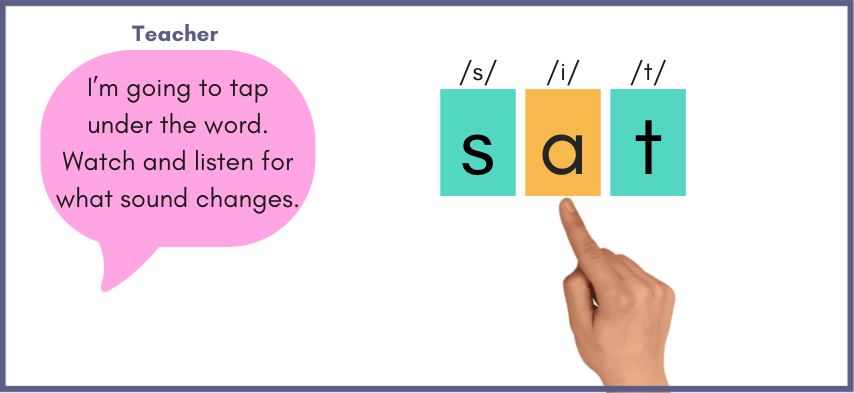
- What sound changed?
- What letter will you take away?
- What letter will you replace it with?
How to Gradually Make Word Chains More Challenging
One of the best things about word chains is how easily they grow with students.
Start Simple
- One sound change at a time
- Start with just changing the first sound, then first and last, then change anywhere.
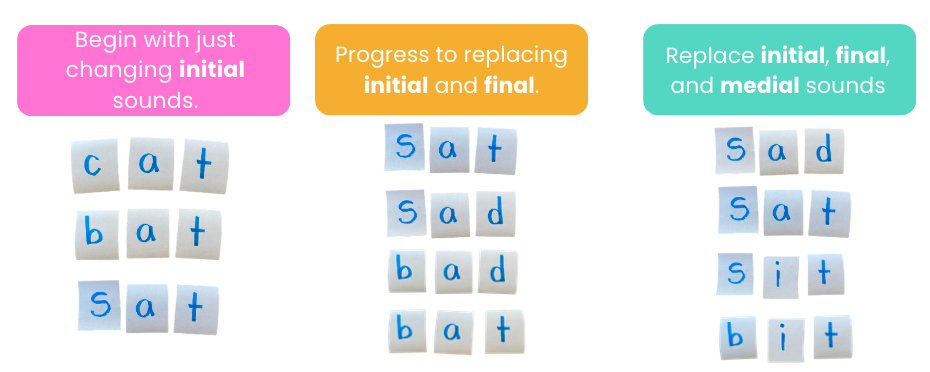
Add Complexity when orthographic rules are applied
Sometimes changing a sound doesn’t just change the grapheme. It also triggers an orthographic rule.
For example:
- Change “rain” to “ray”.
- Here, students must not only take the <n> away as the sound that changed, but they must also change the <ai> to <ay> because the long a sound is now at the end of the word.
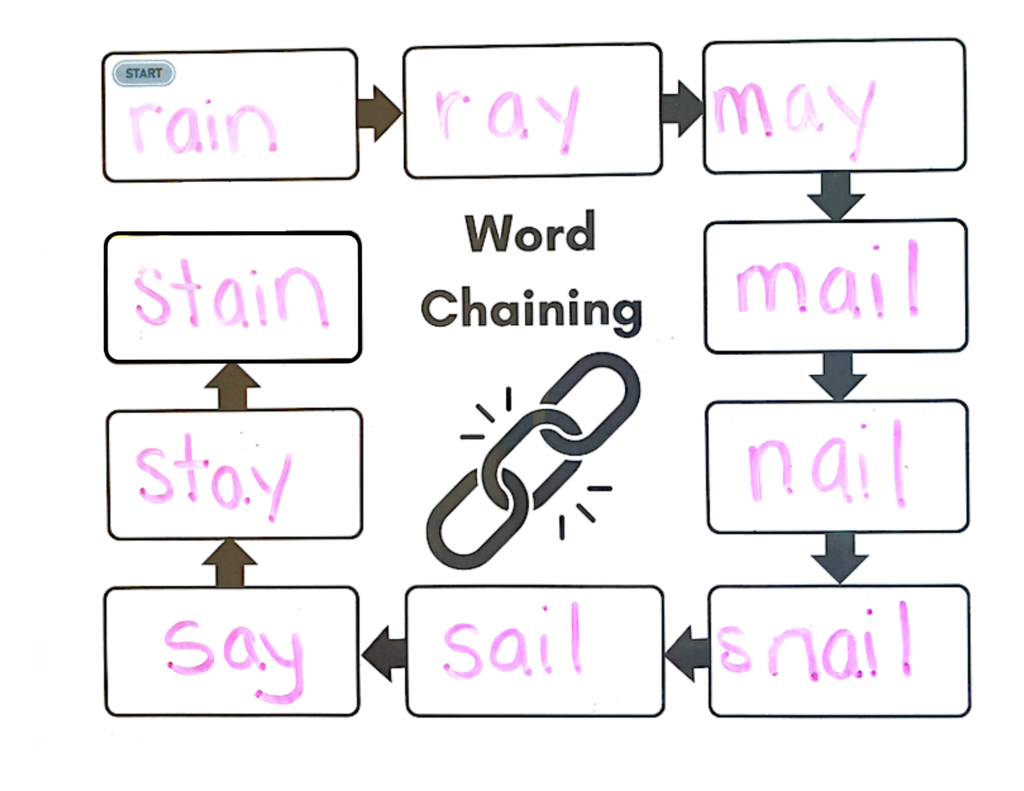
Here is a short video that shows a word chain with silent e, going back and forth from short vowels to long vowels.
Move into Meaningful Word Structure (Morpheme Chains)
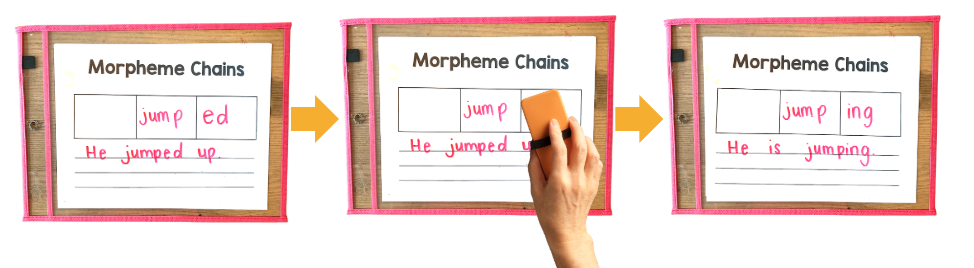
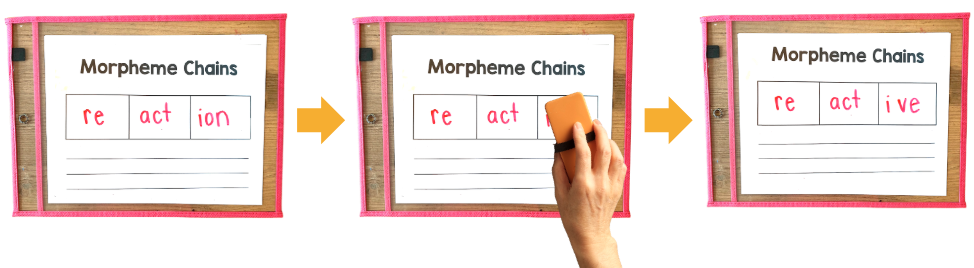
Once students are ready, word chains can move beyond sounds into morphemes (bases, prefixes, and suffixes).
Example:
help → helpful → helpless → helplessness
Now students aren’t just changing sounds, they’re changing meaningful units!
This progression allows you to keep the routine familiar while steadily increasing the thinking required.
Here is another short video showing a morpheme chain.
Note: In this video, I’m using a board with morpheme tiles, but when I do this with a small group or larger group, I use whiteboards or a board like the one shown below. Put this board in a plastic sleeve and give students a dry-erase marker. You can have a simpler morpheme chain for younger students, too!
Why Word Chains Are So Effective
Word chains work because they align with how the brain learns to read and spell.
They support:
1. Phonemic Awareness with Letters: Students must isolate, delete, and substitute sounds, but they do it with print, which directly supports orthographic mapping.
2. Strong Sound–Spelling Connections: Instead of memorizing whole words, students are constantly asking:
- Which sound changed?
- Which letter represents that sound?
- Is there a rule I need to apply here?
That repeated attention builds accuracy and automaticity.
3. Decoding and Encoding Together: Word chains naturally connect reading and spelling. Students read a word, change it, and spell the new word, reinforcing both directions of word learning.
4. Word Awareness: Over time, students begin to notice patterns. That awareness transfers directly to reading and writing.
Extending Word Chains with Word Ladders
Word chains can also be presented as word ladders, where students write each word in a vertical sequence, like you’re going up or down a ladder. The structure stays the same. Each word changes by only one sound or spelling. You can add a picture to the ladder or a picture and a clue.
Adding pictures and clues makes word ladders even more meaningful. Instead of simply changing letters, students have to think about the word’s meaning. This adds an important layer of vocabulary and oral language while students are still getting targeted encoding practice. The result is not just spelling practice, but thoughtful word work that connects sounds, letters, and meaning. The clues or pictures guide students toward the next word, while the ladder format reinforces the idea that only one change happens at each step.
This shows two different levels. The first shows simple CVC words. The other shows vowel teams oa/ow. Notice how they need to switch from oa to ow, applying the orthographic rule for that long o sound.
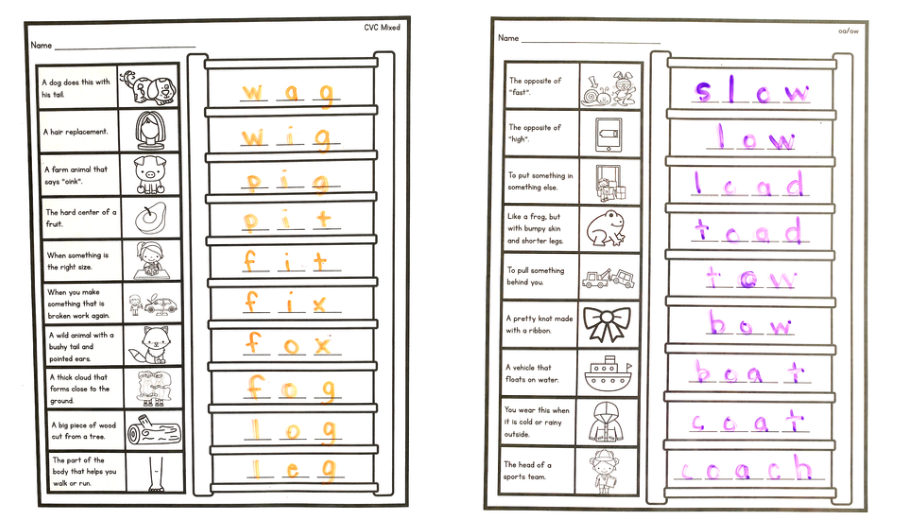
This makes word ladders a great option for small groups, independent practice, or literacy centers, particularly when students are still developing confidence with spelling and decoding.
Ready-to-Use Word Chains for Every Stage
If you’d like word chains that are already organized by skill and progression, from CVC words all the way to morpheme chains, you can find them here.
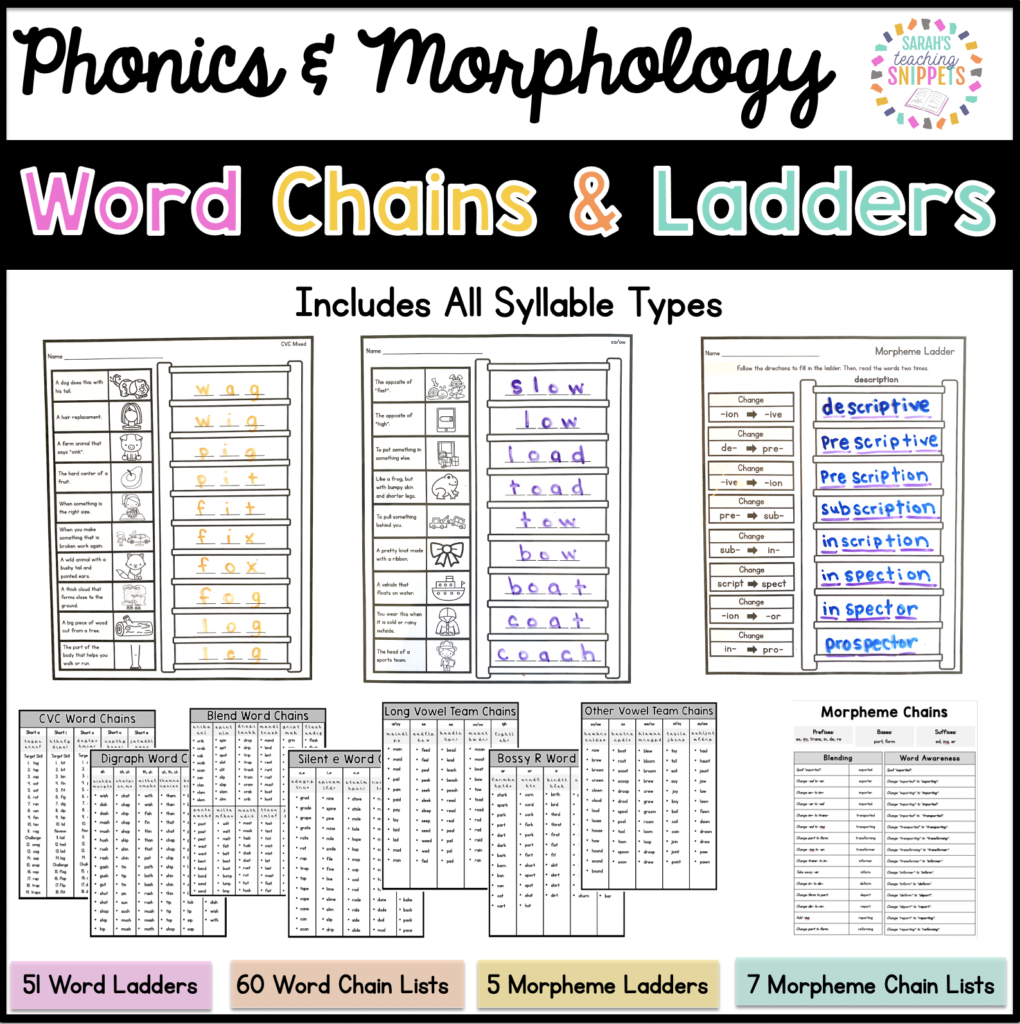
This resource includes:
- Phonics-based word chains (CVC, digraphs, blends, silent e, r-controlled, vowel teams)
- Word ladder worksheets
- Morpheme chains and ladders for older or more advanced students
- Clear directions for decoding and encoding use
- Letter and morpheme tiles for word chain board