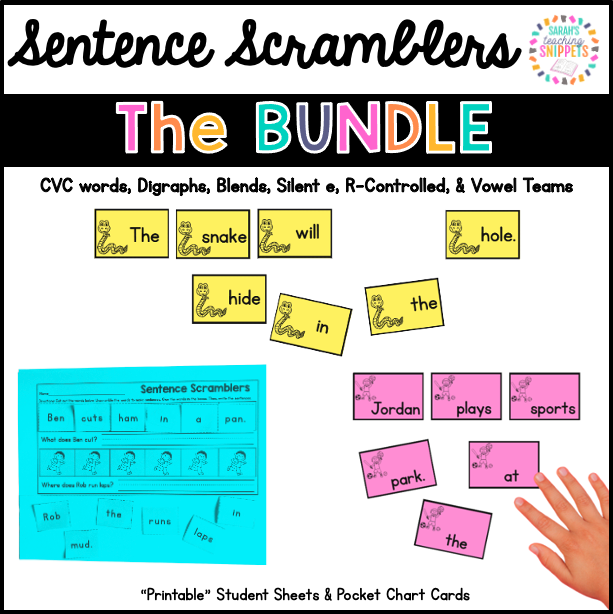
Sentence scramblers are one of my favorite activities because you can get so much out of them! At first glance, it looks simple: students take a set of words and arrange them into a complete sentence. But when you dig deeper, this activity is packed with opportunities for decoding practice, fluency, comprehension, and grammar.
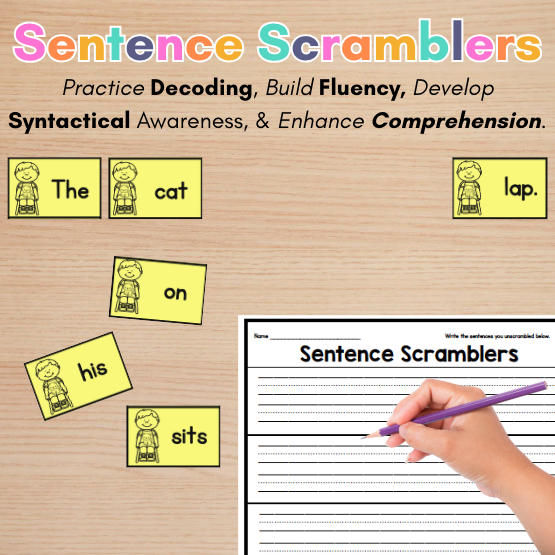
How to Use Sentence Scramblers
- Decode Each Word: Start by having students read each word.
- Look for Clues: Remind your students that the word with the capital letter goes first, and the word with the punctuation mark goes last.
- Arrange and Rearrange: Students put the words in order to form a sentence. If the sentence doesn’t make sense, they try a different combination and reread until it sounds right.
This activity builds syntactic awareness while also reinforcing decoding, word recognition, and fluency. Watch this short video on Instagram to get a more detailed explanation.
Why Sentence Scramblers are Effective
This one activity is great for decoding practice, but it also has the potential to build syntactic awareness while strengthening word recognition, fluency, and comprehension.
- Repetition with Purpose: I love it when we can find a way to get kids to reread without making it seem like a boring task. With this activity, students reread with purpose. They must reread the same words as they test out different sentence orders. This purposeful repetition strengthens automaticity and helps those words stick.
- Sentence Structure – Students see how words fit together to form a sentence. You can reinforce that every sentence needs a who/what (subject) and an action (verb), while showing how little words like the or to hold it all together. Adjectives and other details can then be added to expand and enrich the meaning.
- Grammar in Context: Sentence scramblers naturally open the door to discussions about verbs, nouns, adjectives, and function words. Kids notice how swapping a word or moving it around changes the whole sentence.
Getting the Most Out of Your Sentence Scramblers
Sentence scramblers are incredibly flexible. Here are some extension ideas:
- Question: After reading the sentence, have students picture it in their minds and answer: Who is this about? What did they do? Even better, have them think of a question to ask. For example, a student might ask, “Why is he running in the mud?”
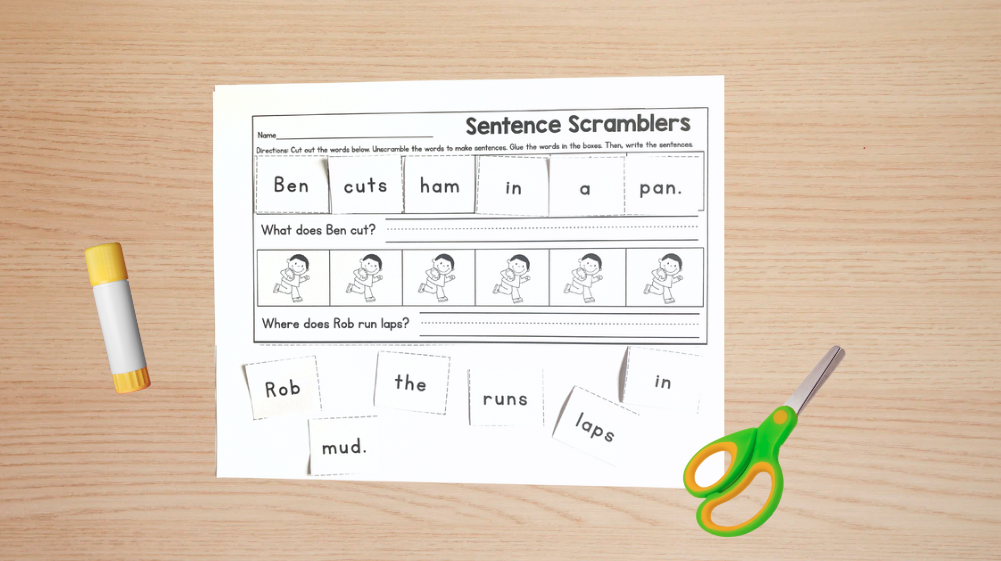
- Practice Phrasing: After building the sentence, group the words into meaningful phrases and reread for fluency.
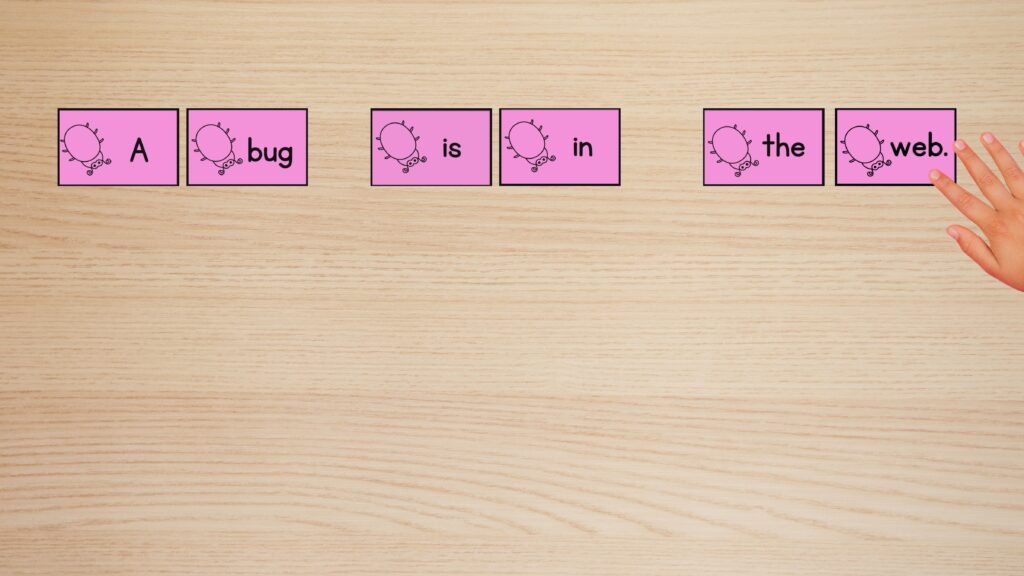
- Sort by Word Function: Separate words into categories like nouns, verbs, adjectives, or function words.
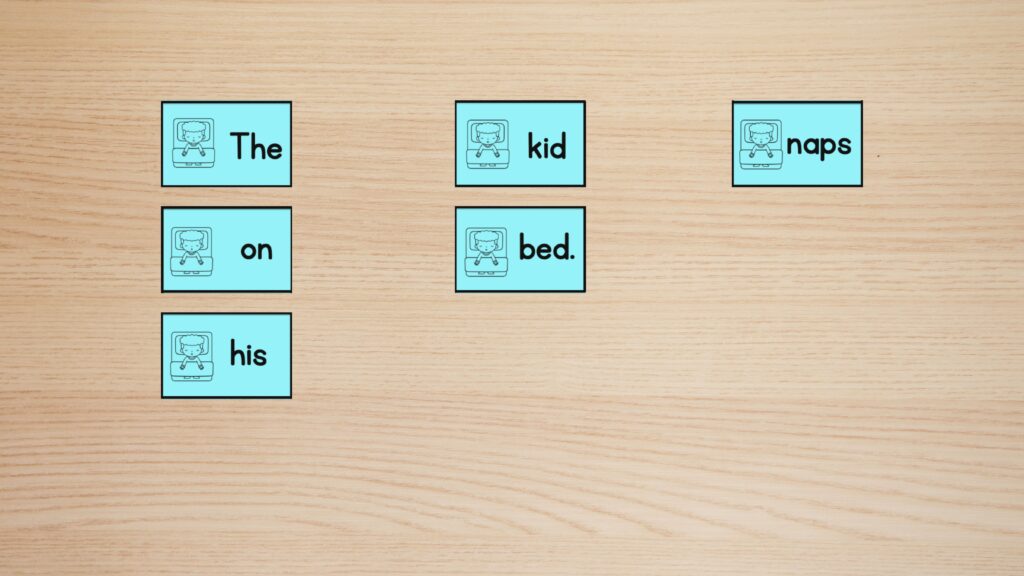
- Play with Language: Switch out function words (in/on or is/was) or move adjectives to see how the meaning changes. In the picture below, you can play with the word “big”, discussing different places where it could go in the sentence.
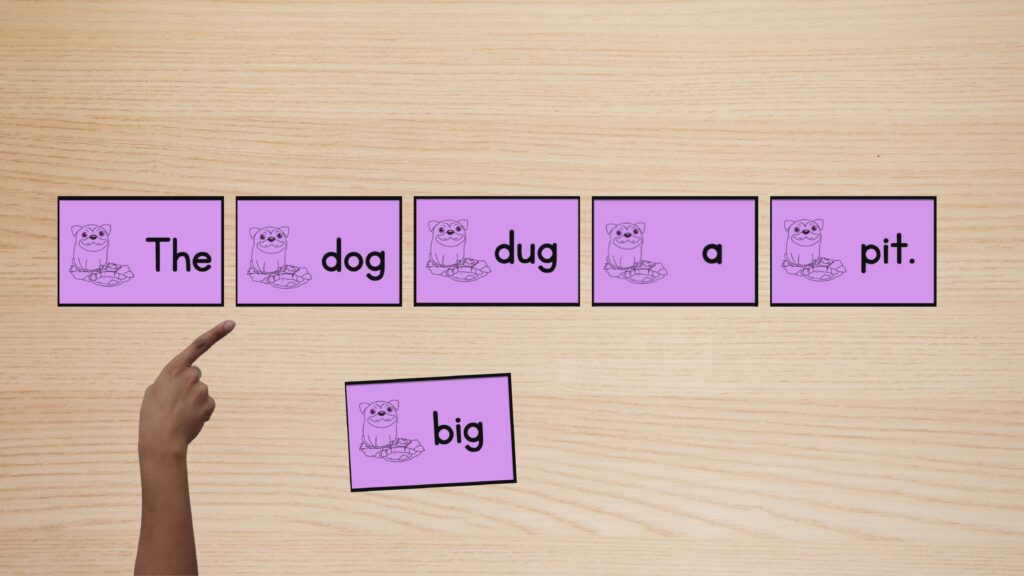
- Discuss Multiple Meanings: If a word can mean more than one thing, explore all possibilities. Show how you won’t know the exact meaning until the sentence is complete.
- Expand the Sentence: Once the basic sentence is built, encourage students to add on orally with extra details.
Targeted Practice
One of the best parts about sentence scramblers is how flexible they are. You can design them to fit whatever skill or content you’re teaching.
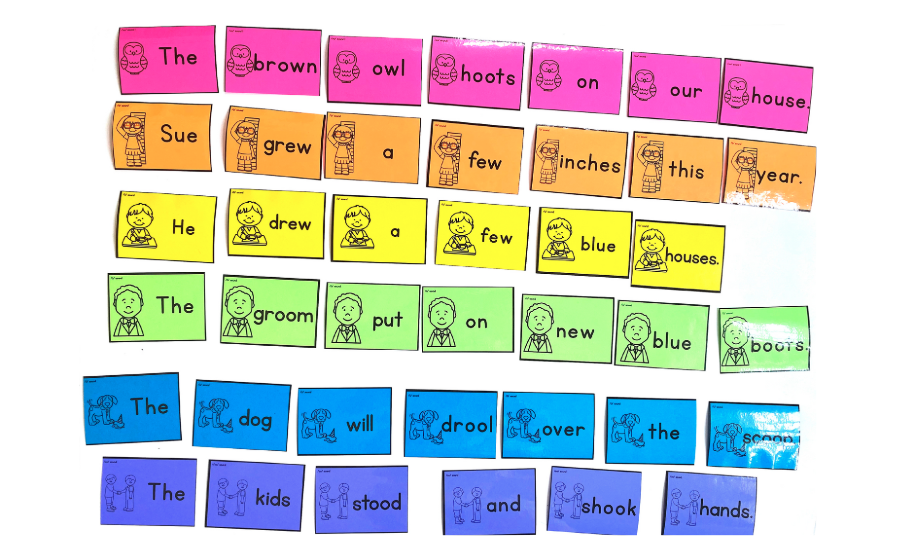
- Phonics Focus: For younger readers, scramblers can be built from decodable sentences that match your current phonics skill. For example, if you’re working on CVC words, your sentence might be “The cat sat on the mat.” If you’ve moved on to silent e, you might use “Jake will ride his bike for one mile.” This gives students decoding practice in context while also strengthening their understanding of how those words fit into complete sentences.
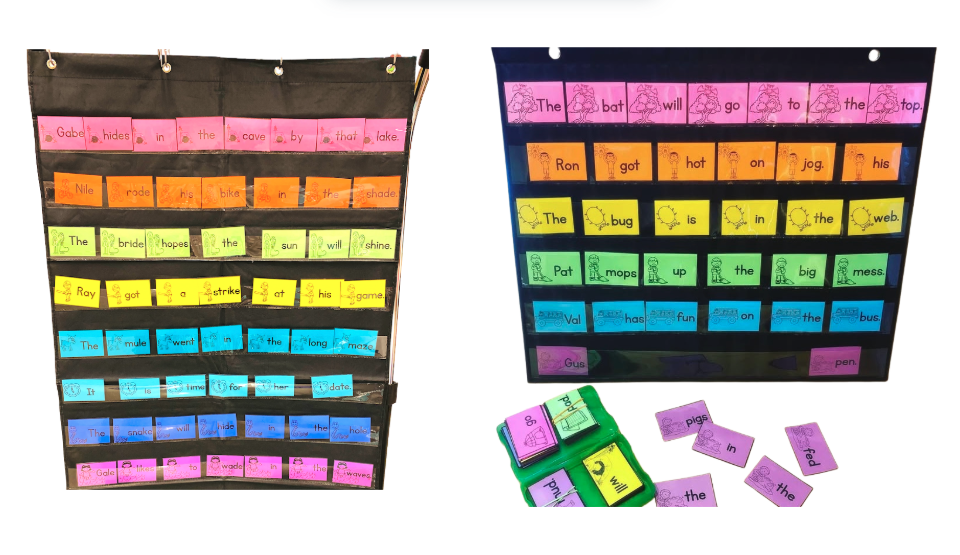
- Content Connections – For older students, sentence scramblers can tie directly into science, social studies, or other subject areas. Instead of just practicing word order, students are reinforcing key content. A scrambled sentence might be “Plants need sunlight to make food” in science, or “Communities make rules to keep people safe and fair.” in social studies. That way, students practice syntax and fluency while also reviewing important information.
Resources
If you are looking for Decodable Sentence Scramblers, look no further! I have a set for every phonics skill! Each set has decodable sentence scramblers that come in two different formatting options: “cut and laminate” cards for pocket charts and “print-ready” student worksheets. These are perfect for small or large group interactive lessons, literacy centers, or independent practice. My favorite way to use them is in small groups because you can listen in as students read, guide them through word order, and prompt them to explain why a sentence does or doesn’t make sense.
You can get them separately by skill….

Or snag them all at a discounted price! Click here to check them out.