Consonant blends (or consonant clusters) play a big role in early reading development, yet they can be surprisingly tricky for young learners. Even though the letters are familiar and no new graphemes are introduced, words with blends often contain four or more phonemes, which makes things a lot harder for kids who are still learning how to hear and blend sounds.
That’s why I teach consonant clusters with intention, not as new spelling rules to memorize, but as opportunities to build strong blending skills and phonemic awareness.
Many students can blend three sounds in CVC words like cat or mud, but they start to struggle when the word begins with a blend like grab or trip. That’s not a failure of phonics knowledge; it’s a sign that they need more support holding, hearing, and blending multiple sounds in sequence.
A Little Background
As you may know by now, I take a systematic approach to reading. In kindergarten, students get instruction with both phonemic awareness and sound-symbol relationships, starting with the letters of the alphabet. As they learn new letters and develop phonemic awareness, I begin teaching them to read VC and CVC words. You can read about that process here.
After CVC words, I introduce digraphs with short vowels only (ship, wish, that, chop). Each lesson builds on the last, so when I’m teaching digraphs, they will not be reading or writing the words “peach” or “shark” because I have not taught vowel teams or bossy r. After digraphs, I teach consonant blends, again with short vowels only. At this point, students know 26 consonants and their most common sounds, short vowel sounds, and digraphs (sh, th, ch, ck, and wh). They are going step by step. With this in mind, I can now go into how I teach consonant blends. (At the bottom of this post, you can see my systematic phonics units.)
Introducing Consonant Blends
I begin by reviewing the difference between consonants and vowels to activate prior knowledge. Then, I explain that a consonant blend (also called a consonant cluster) is when two or more consonants appear next to each other in a word, and each one keeps its own sound.
I make it clear that, unlike digraphs, where two letters make one sound, blends involve two distinct sounds that are closely connected. Often, the sounds are so close together that it can be hard for students to pull them apart. That’s why we focus on listening carefully and blending smoothly.
To reinforce the concept, I build a series of examples and non-examples and ask students to give me a thumbs up if they see a consonant blend. For instance, if I place the letters s and t together, they give a thumbs up.
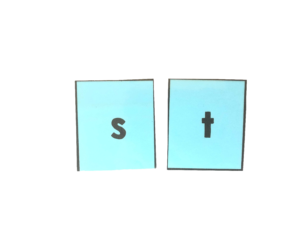
We also look at non-examples, like digraphs, and talk about the difference. This helps deepen their understanding and builds the habit of listening for and identifying individual sounds within a word.
Learning to identify consonant blends is helpful because it encourages students to pay close attention to each phoneme in a word. Instead of guessing or treating clusters like one sound, they begin to analyze and blend each sound in sequence, which improves both decoding and spelling accuracy.
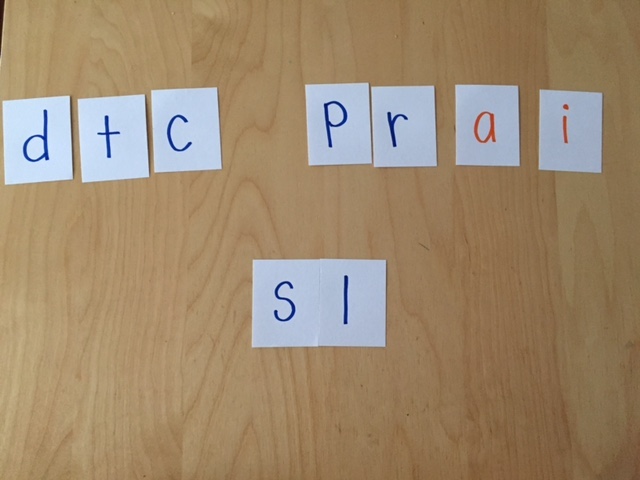
Next, I model how to read consonant blends on their own (just the two consonants without any vowels yet). This can be surprisingly difficult for students who are still developing phonemic awareness. Many will try to insert a vowel that isn’t there. For example, they might read cr as “car” or sp as “sip.”
This is a great opportunity to slow down and focus on hearing and blending each individual consonant sound. We practice saying each sound clearly /k/ /r/ or /s/ /p/ and blending them together smoothly, without adding a vowel.

Listening for Consonant Blends in Words
This is a phonemic awareness activity, but I’ve found it’s an important one for students who struggle to hear and manipulate sounds.
I start by saying a word that includes a consonant blend. Students repeat it aloud because it’s important that they say the word themselves to begin forming that sound awareness internally.
Then I model how to separate the word into onset and rime. For example: stem becomes st–em. Students repeat it after me. Once we’ve identified the consonant blend at the beginning, we isolate just the blend (st in this case), say it aloud, and then break it into its two individual sounds.
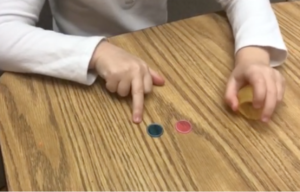
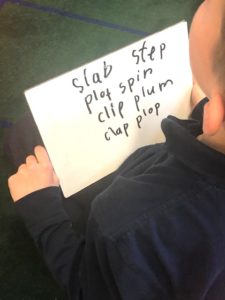
At that point, students use their whiteboards to write the sounds they hear. I also have them “finger spell” or “tap it out” (tapping one finger per sound to reinforce phoneme segmentation).
This step can be really beneficial for struggling readers with weak phonemic awareness. Many students who find consonant blends difficult have underlying phonemic awareness gaps, and jumping straight to reading full words doesn’t give them the support they need. It may be just a small group activity for those students who need it. Watch this short 20 second video to see this in action (and to see why this work is important).
Picture Sort with Consonant Blends
I also like turning this into a sorting activity using picture cards. This makes the practice more interactive and gives students repeated exposure to hearing and identifying blends in words. One resource I love includes tons of picture cards with consonant blends (and other phonics patterns)—enough to use across multiple lessons.

The picture cards are sorted under headers like gl, gr, cr, cl. Students say the word aloud, listen for the beginning blend, and then sort it under the correct header. This simple routine strengthens both phonemic awareness and sound-symbol connections, and it’s great for small group work or literacy centers!
Encoding (Spelling) Words with Consonant Blends
Spelling words with consonant blends can be tricky, especially because it’s easy for students to accidentally leave out the second consonant in the blend.
We start by segmenting the word into all its individual sounds, just like we would during phoneme-grapheme mapping.
- Say the word aloud. Students repeat the word.
- Connect to meaning. Use the word in a sentence.
- Break the word into all its individual phonemes.
- Students tap or finger spell each sound as they say it:
For example: step → /s/ /t/ /e/ /p/ - Then we write the word, connecting sounds to symbols.
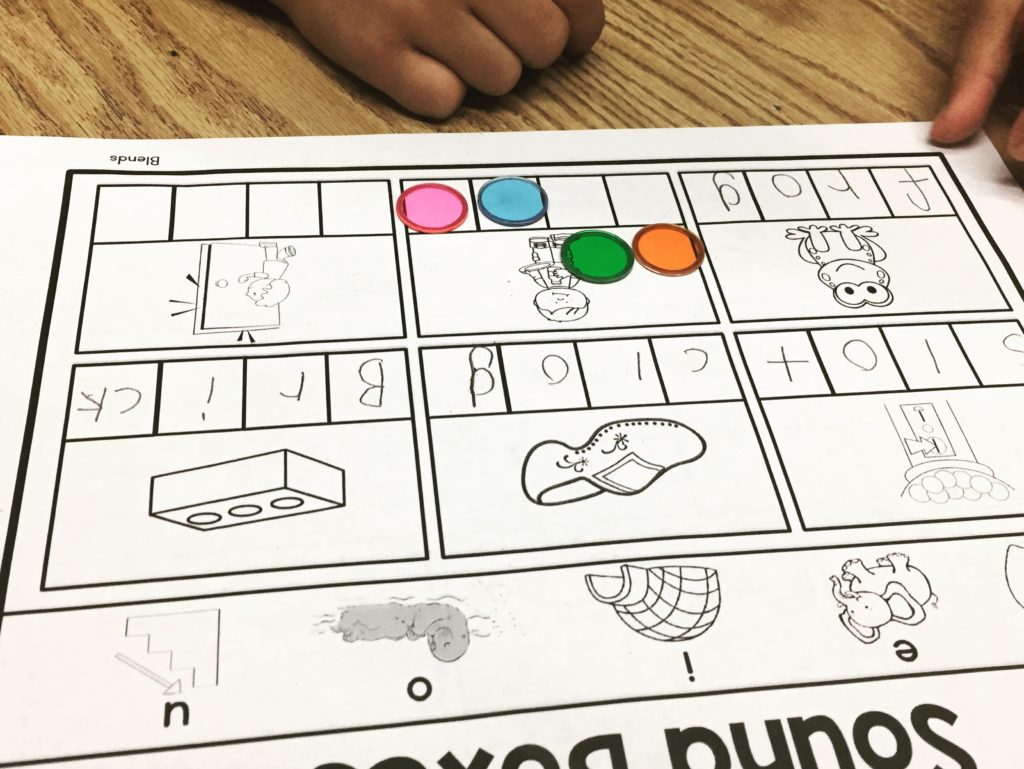
Sound boxes can be a helpful tool!
A Helpful Scaffold: Onset + Rime
For students who need extra support, it can help to separate the blend (onset) from the rest of the word (rime) as a scaffold. This makes the task of holding and encoding all four sounds more manageable.
We revisit the blend first:
- I ask, “What blend do you hear at the beginning?”
- Students say: “st”
- Then we “pull apart those two sounds”—/s/ /t/—and write those letters first.
Next, we say the rest of the word: “ep”
We stretch the remaining sounds—/ĕ/ /p/—and finish writing the word.
Finally, we blend and read the full word again: step.
This approach supports accuracy, especially for those students who are still developing phonemic awareness and working memory skills.
Decoding Words with Consonant Blends
Often, when students try to blend all the sounds in a word without support, they end up dropping one of the consonants in the blend. So I teach them to blend the first two consonants together, then stretch through the rest of the word. This helps them hear and hold all the sounds more effectively. This is similar to the successive blending strategy that we teach kids when they are reading CVC words.
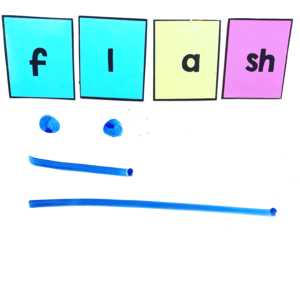
- Write the word or build it using letter tiles (magnetic letters or pocket chart tiles).
- Say, “Since there are two consonants right next to each other at the beginning, let’s read that part first.”
- Tap under the f: /f/
- Tap under the l: /l/
- Then say: “/f/ /l/ = fl” and draw a line under the fl.
- Then we stretch and read the rest of the word:
“fl…aaaaa…sh” while drawing a continuous line under the rest of the word. - Finally, we blend it all together: flash.
While this is a decoding strategy, it’s crucial that students do not think of blends like fl as one unit or sound. I always clarify: fl represents two sounds, not one.
Using chunking as a tool for fluency is helpful, but we need to maintain the phonemic and orthographic clarity that fl = /f/ + /l/, not a single unit.
Want a digital option? These Decoding Slides can be projected to use with a whole class or used on an iPad for individual practice.
Automaticity Drill
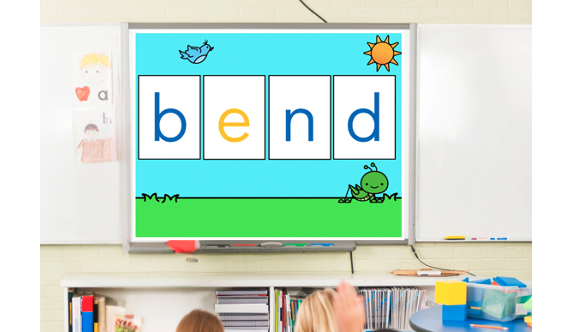
This quick warm-up helps students build fluency and confidence with consonant blends. At first, we focus on beginning blends only. As students become more accurate with blending and spelling, I gradually introduce ending blends as well. We focus on blending the consonant sounds smoothly but accurately (always reinforcing that blends are made of two or more separate sounds.)
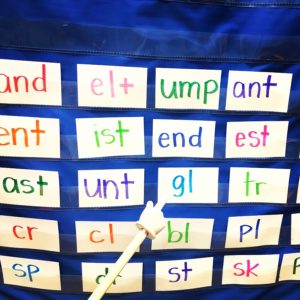
We also do a quick spelling version: I say a blend (like /s/ /t/) and students quickly write the sounds or word part on their whiteboards. This builds speed and confidence while reinforcing phoneme-grapheme connections.
Other Activities to Practice Reading Blends
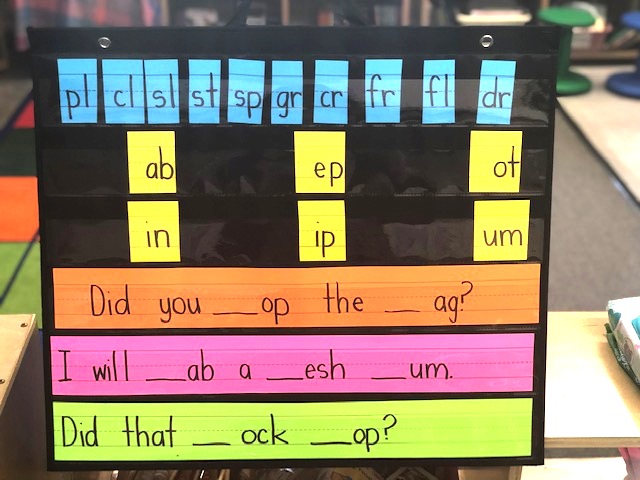
You can provide as much guidance as your students need for this activity. Some groups will need your guidance throughout, while others will run with it. Give your students whiteboards or phonics notebooks and ask them to combine the blends with the word families to make as many real words as they can. It gets them reading so many combinations! The bottom sentences are a challenge! They need to choose consonant blends to make the sentence work. I give students time to try to figure it out then I’ll work it out with them. They love it! After writing a bunch of words on their whiteboards, they partner up and read those words.
Printable Intervention Books
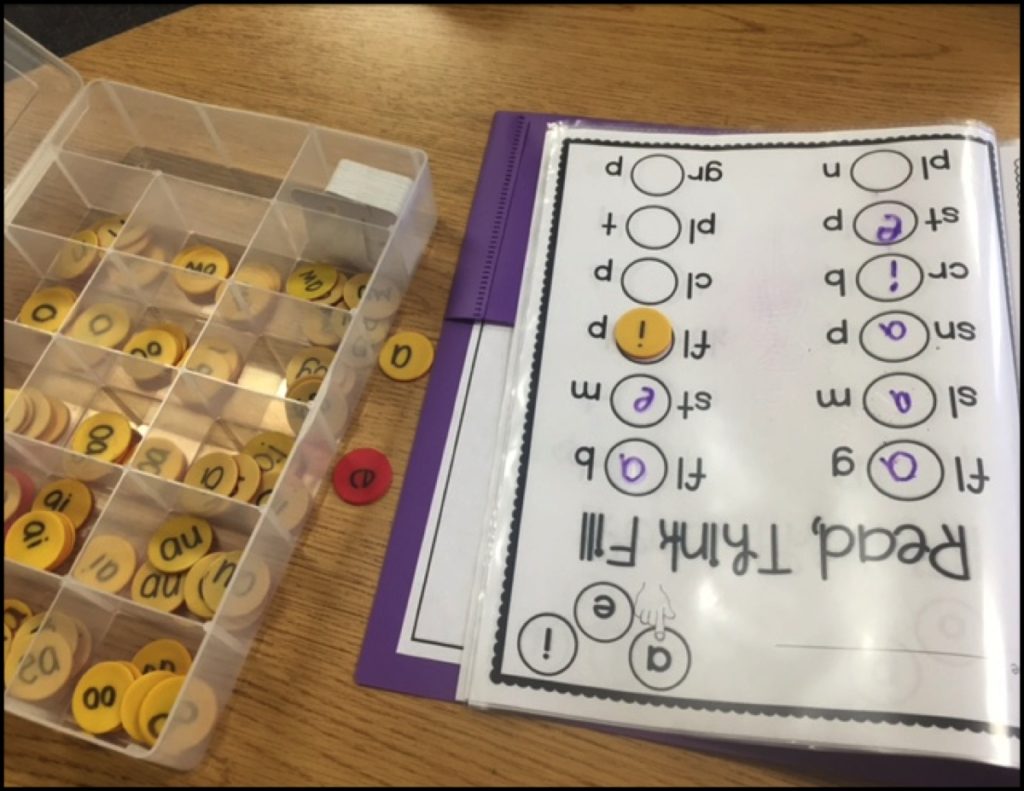
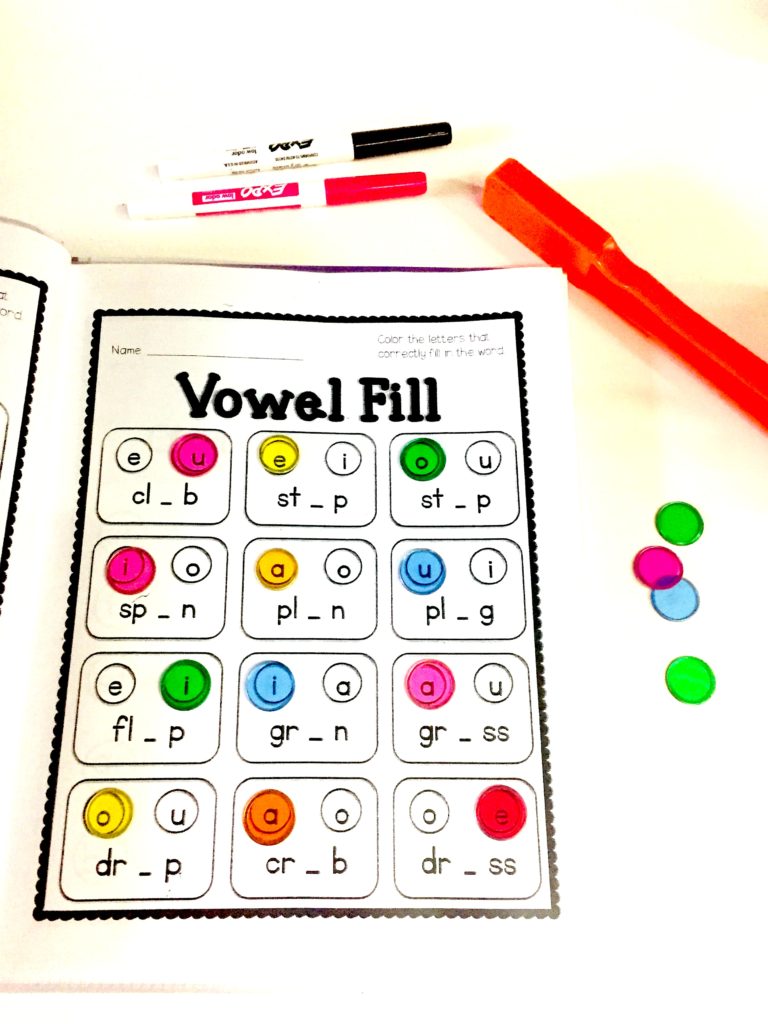
Another resource I rely on for small group practice is my Printable Intervention Resource. I put all of the pages together using 3-prong folders and plastic sleeves. The best part is that it’s all ready to go anytime I need it, and I can use and reuse it with multiple groups. (You can also just use the same activities as single worksheets.)
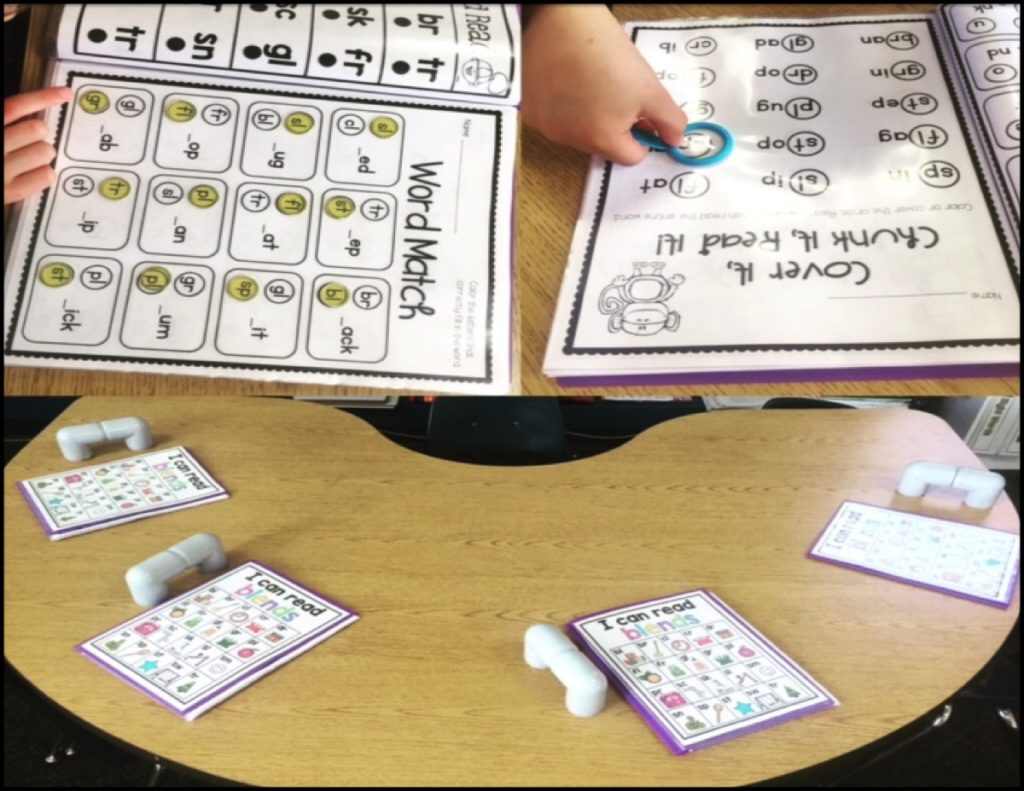
This is packed with activities, giving your students plenty of much-needed practice reading and spelling words. You wouldn’t need to use every single page in your blend book, but it’s nice to have options. Some groups may only need a handful of pages, while others might go through the entire thing before mastering the skill of reading and spelling blends.
Building, Reading, and Writing Sentences
The transition from reading single words to reading full sentences can be challenging for some students, especially those who are still building fluency and confidence. To support them, I incorporate sentence activities that reinforce decoding and comprehension in a fun, hands-on way.
Build a Sentence
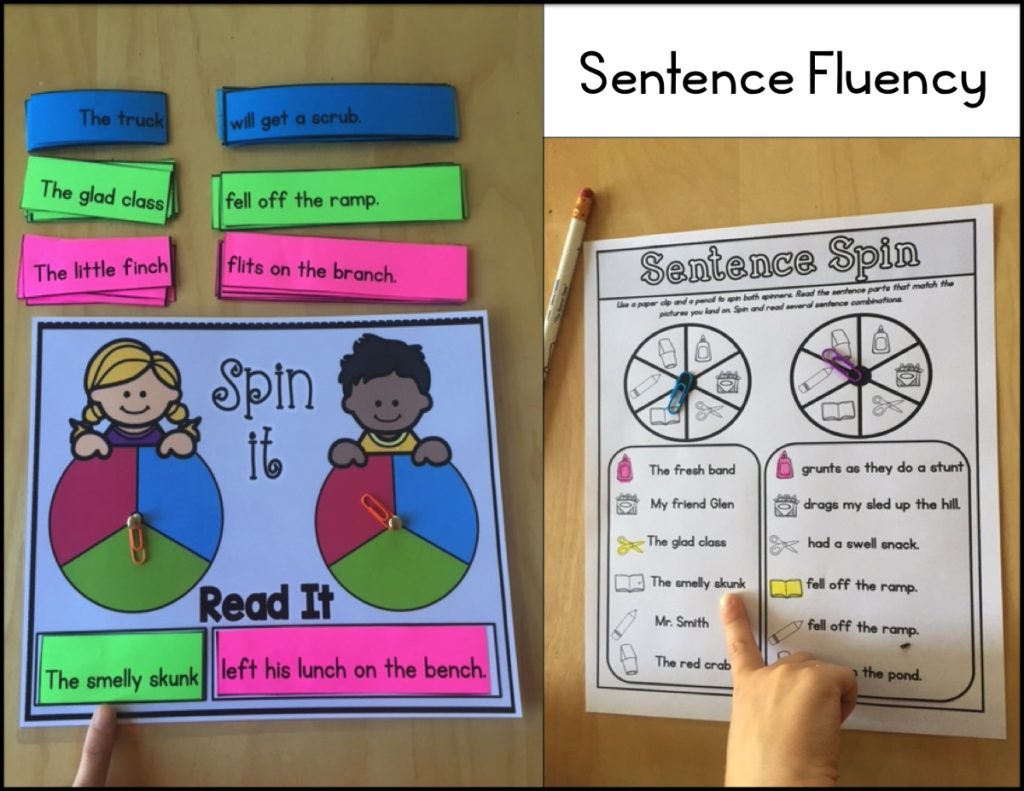
One of our favorites is Build a Sentence. Students use color-coded cards to match parts of a sentence (subject, verb, details) and build a complete sentence on the board. Some of the sentences end up being silly or unexpected, which always leads to some giggles!
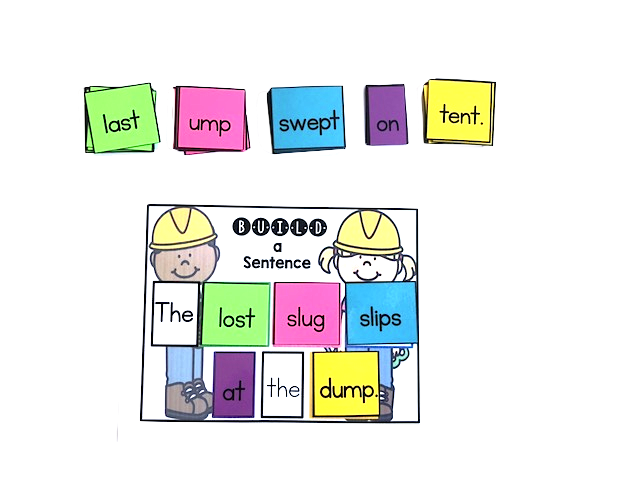
This not only strengthens decoding and fluency—it helps students begin to understand how sentences work, and gives them practice using blends in meaningful context.
Connecting Phrases with Blend
This activity is similar, but instead of constructing sentences word by word, students are given pre-written phrases. I often start by using these phrase cards as a quick fluency drill where students read each phrase smoothly and accurately.
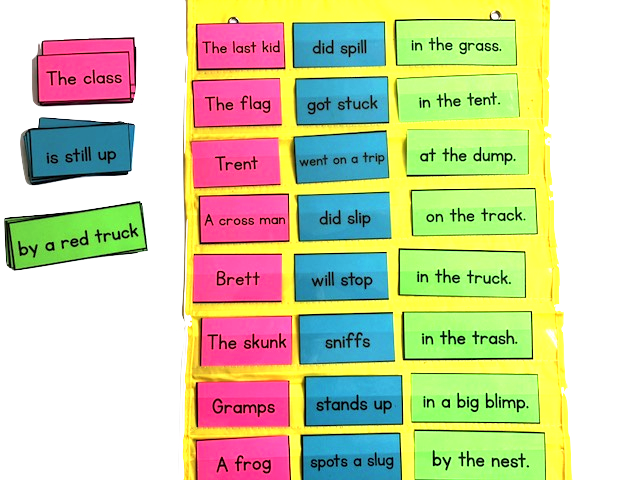
Once they’ve practiced reading the phrases, we move into sentence combining. Students choose two or more phrase cards and work together to create a complete sentence. This builds fluency, reinforces sentence structure, and encourages flexibility with language.
It’s a great way to extend their learning while keeping things engaging and accessible. Plus, it gives students more opportunities to read and reread words with consonant blends in context. Find it here.
Sentence Scramblers
An all-time favorite in my classroom is the Sentence Scrambler. These sentences are fully decodable with a few common high-frequency words mixed in, making them perfect for reinforcing phonics skills in context.
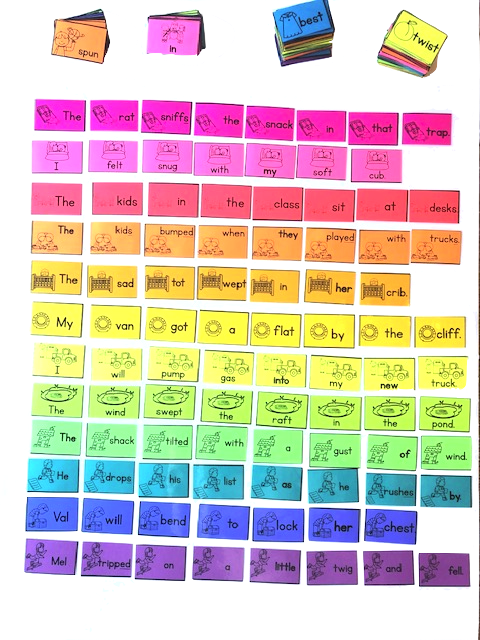
Students are given scrambled sentence cards and must read the words, figure out the correct order, and build the sentence. It’s a great way to work on decoding, sentence structure, and comprehension all at once.
You can use this as a center activity for independent or partner work, or model it during whole group instruction using a pocket chart. My students love the challenge—and they especially love rereading their sentence once it’s built!
Incorporating Sentence Structure while Practicing Blends
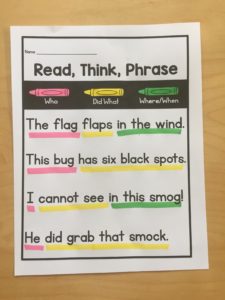
I also use these decodable sentences a lot! These give students the chance to practice decoding in context while reinforcing sentence structure and comprehension.
After reading each sentence, we go back and identify key parts:
- Who is the sentence about (the subject)?
- What did they do (the action)?
- Is there a where or when phrase?
This routine helps students connect decoding with meaning, and it supports their understanding of how complete sentences are built. It’s a simple but effective way to blend phonics, grammar, and comprehension into one activity.
Make it a Game
My students love using this Sentence Spin. Sometimes it makes silly sentences and sometimes it makes real sentences. Either way, they are reading words with consonant blends. I also use it as a mini-comprehension activity. Beginning and struggling readers often end up sounding out words but not thinking about what is being read. When using this activity, I always ask, “Who is the sentence about? What is the character doing?” Sometimes I ask them to describe what they are visualizing.
Dictation
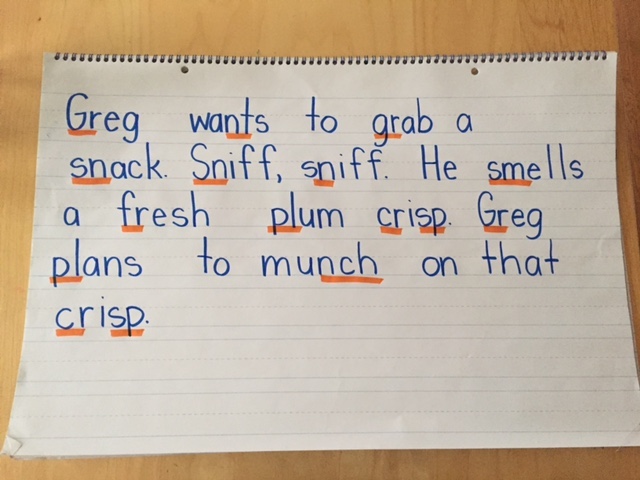
I also make time for dictation practice using phonetically controlled sentences with consonant blends. Early on, I made the mistake of focusing mostly on decoding and not giving students enough opportunities to encode.
But encoding is just as important. Spelling words and sentences with the phonics patterns they’ve already learned helps students internalize those patterns, strengthen phoneme-grapheme connections, and build confidence in their writing.
Dictation doesn’t have to be long or complicated! A few well-structured sentences go a long way. The key is giving students regular opportunities to apply their knowledge in both reading and writing. Read more about dictation in this blog post.
Need pre-made sentences for dictation. Check this out!
Increase Fluency with Decodable Stories
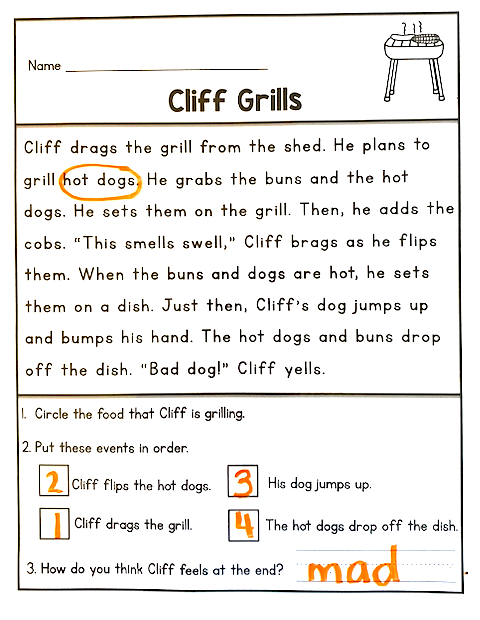
Phonetically controlled short stories are one of my favorite ways to reinforce phonics skills while building fluency and comprehension. These stories give students a chance to apply what they’ve learned in context, using their decoding skills instead of guessing.
Because the words are carefully chosen to align with previously taught phonics patterns, students can experience real success while reading. They develop stronger reading habits, build confidence, and begin to see themselves as readers.
With decodable stories, we’re not just practicing phonics, we’re helping students connect all the pieces: decoding, fluency, and meaning.
Wrapping It Up
Teaching consonant blends doesn’t have to be overwhelming, and it’s not about memorizing letter combinations. It’s about giving students the tools they need to hear, blend, read, and spell words with confidence.
By building in phonemic awareness activities, structured encoding and decoding routines, sentence practice, and opportunities to read connected text, you’re setting your students up for success. Every step from isolating blends to writing full sentences helps them move from sound to word to meaning.
Whether you’re working with beginning readers or supporting students who need extra practice, these strategies can make a big difference.